Why Krunker Refuses to Die
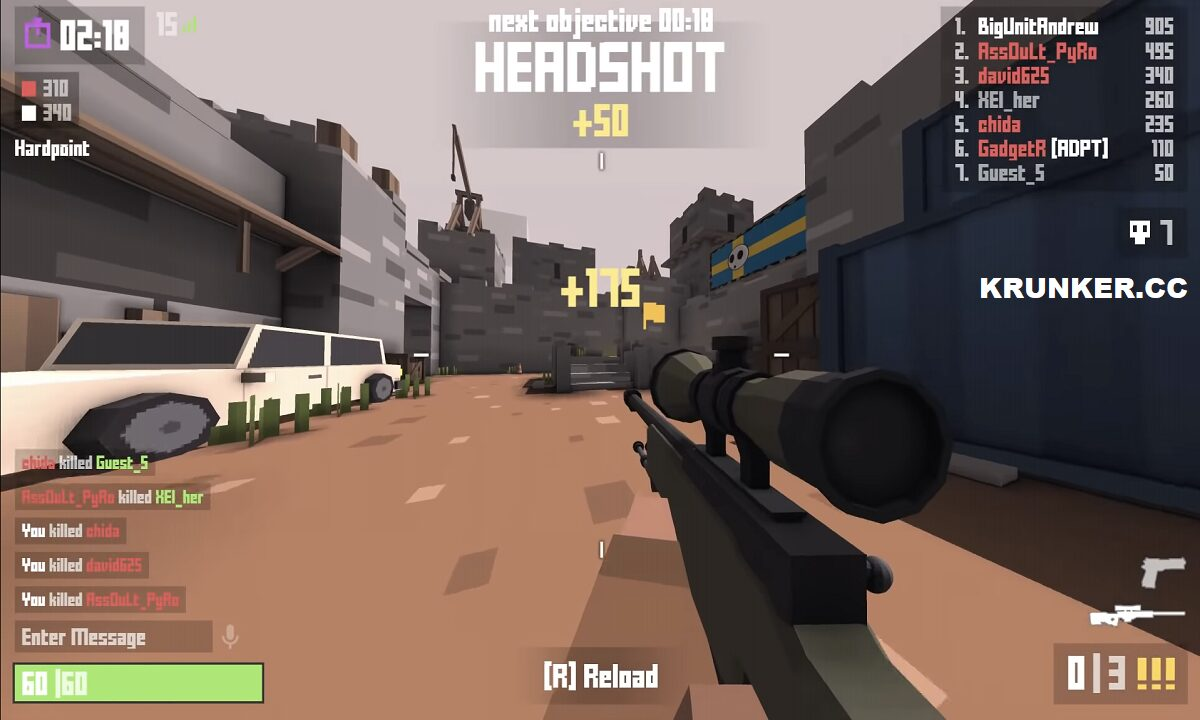
Most browser FPS games burn bright and fade fast. They launch, rack up a few million plays in the first month, and then quietly disappear into the graveyard of dead .io titles. Krunker.io is the exception. Released in 2018 by Sidney and Vincent de Vries under Yendis Entertainment — and now backed by FRVR — it has survived for eight seasons, weathered multiple meta shifts, and still hosts a competitive scene with real cash prizes in 2026.
I've been covering browser games for years, and Krunker is the one I keep coming back to. Not because it's the most polished or the most innovative, but because it does something almost no other browser shooter manages: it makes movement feel good. The slide-hop mechanic alone — a physics exploit that became the game's signature — creates a skill ceiling so high that top players look like they're playing a different game entirely.
Here's the thing that hooked me. My first dozen matches were miserable. I'd spawn, take two steps, and get headshot by someone I never saw. I'd try to shoot back and my bullets would spray harmlessly into a wall. The game felt unfair, broken, maybe even rigged. But then I watched a tournament clip on YouTube — a player named PvlseFN sliding through Burg at Mach 3, flicking headshots mid-air, chaining kills like it was choreographed — and I understood. Krunker wasn't broken. I was just playing a different game than the one everyone else was playing.
This guide is my attempt to bridge that gap. Not a generic "here are the basics" walkthrough, but an honest breakdown of what actually matters: the movement system that defines the game, the class matchups that dictate every gunfight, the maps that reward positioning over raw aim, and the competitive scene that keeps the whole thing alive.
I wrote this guide after 300+ hours of Krunker across two seasons. I'm not a pro — my KDR hovers around 2.5 in context, and I get clapped by actual competitive players regularly. But I've talked to enough of them, watched enough tournament VODs, and ground through enough ranked matches to know what separates someone who plays Krunker from someone who understands it. That distinction is what this guide is about.
The Class Chessboard
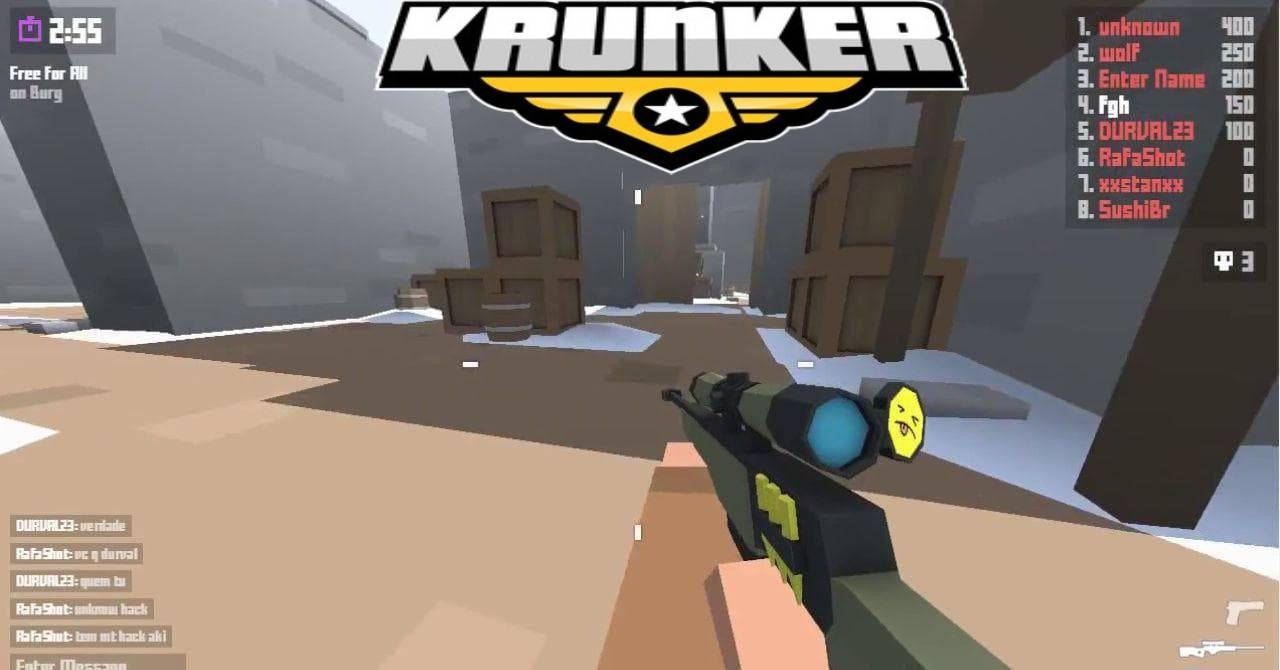
Sixteen classes. That sounds overwhelming until you realize the meta distills to about five that matter in serious play, with a handful of situational picks. Let me walk you through what I've learned from hundreds of hours of matchmaking and conversations with competitive players.
Triggerman is the baseline. 100 HP, an assault rifle, decent movement speed, the ability to aim down sights. It's the class the game is balanced around, and for good reason — it has no crippling weakness. If you're new, start here. If you're experienced, Triggerman is still a perfectly viable pick for almost any map. The assault rifle has manageable recoil, solid damage at medium range, and enough fire rate to punish enemies who miss their first shot. I ran Triggerman exclusively for my first 50 hours, and I don't regret it.
Hunter is the most-played class in the game, and the most polarizing. Sixty HP. One shot from the sniper rifle kills almost any class with a body shot. Headshots are instant kills on everyone, including the 170-HP Spray N Pray tank. The trade-off is brutal: you die to basically everything. A Triggerman who lands two AR shots kills you. A Detective who hits one revolver headshot kills you. A Run N Gun who gets close enough to SMG you in the face kills you. Hunter is a glass cannon with a nuclear warhead, and the entire competitive meta revolves around it.
Detective is the Hunter counter. The revolver deals roughly 97-98 damage on a headshot — not enough to kill a 100-HP class, but absolutely lethal to Hunters at 60 HP. The Detective has 100 HP, moves fast, but can't wall-jump and has no secondary weapon slot. Every shot has to count. I've seen competitive players run Detective specifically to shut down Hunter-heavy lobbies, and it works. One player on the Krunker Discord put it bluntly: "Detective isn't a class, it's a contract. You take the contract to kill every sniper in the lobby."
Run N Gun is the speed demon. SMG, fastest base movement in the game, wall-jumping capability. The SMG has low per-shot damage but an absurd fire rate. At close range, Run N Gun shreds. At long range, the bullet spread makes it useless. This class is all about closing distance — slide-hop in, wall-jump to gain angle advantage, and melt the enemy before they can react. It's the hardest class to play well because it demands flawless movement, but a skilled Run N Gun player is genuinely terrifying.
Spray N Pray is the tank. 170 HP. A 100-round LMG. The slowest movement speed in the game. It's the anchor class — you plant yourself on a Hardpoint, absorb damage that would kill anyone else twice over, and lay down suppressive fire. In public matches, Spray N Pray feels unkillable. In competitive play, its lack of mobility makes it a liability on maps with long sightlines. It's a situational pick, not a main.
Vince deserves a mention because the shotgun creates one of the most unique mechanics in Krunker: the shotgun jump. Fire at the ground while jumping, and the recoil launches you skyward. A skilled Vince player uses this for vertical mobility that no other class can replicate — popping over walls, reaching rooftops, and appearing where enemies don't expect. Close-range, the shotgun is devastating. The catch? If you miss your first shot at range, you're dead before you can cycle the next shell.
The remaining classes — Marksman (semi-auto rifle, 90 HP), Bowman (crossbow, one-shot kill potential), Rocketeer (rocket launcher, 130 HP), Agent (dual Uzis, hip-fire only), Commando (burst-fire FAMAS), Trooper (recoil-free Blaster), Infiltrator (charge rifle, 90 HP, introduced in v6.0.0) — all have niches. None of them dominate the meta, but each has moments where they shine. The Infiltrator, in particular, is fascinating: the charge rifle deals increasing damage the longer you track a target, capping at over 750 damage per clip. It's the only class that can reliably burn down a Spray N Pray. But the slowdown while firing and the low 90 HP make it extremely punishing.
Class counter chain: Hunter beats Triggerman at range. Detective beats Hunter. Run N Gun beats Detective. Triggerman beats Run N Gun at range. This rock-paper-scissors dynamic is why competitive teams run mixed compositions — you need answers to whatever the enemy team picks. Memorize this chain. It'll save your life.
Movement Is Half the Game
If you take one thing from this guide, let it be this: in Krunker, movement is not secondary to aim. It's co-equal. Maybe even primary. I'd argue that a player with mediocre aim and excellent movement will consistently beat a player with excellent aim and mediocre movement. Here's why.
Standing still in Krunker is a death sentence. The time-to-kill is so short — a Hunter headshot is instant, an AR burst takes under a second, a revolver headshot on a 60-HP class is instant — that being a stationary target means you die before your brain registers the threat. Movement is your defense. Not cover, not health, not armor. Movement.
The core technique is slide hopping. Here's the mechanical breakdown: you jump, and the instant you're about to land, you hit crouch (Shift). This initiates a slide. Before the slide ends and friction kicks in, you jump again. Each cycle preserves your forward velocity and adds to it, letting you build speed far beyond the normal walking rate. The rhythm is: W + Space → Shift on landing → Space → Shift → repeat.
That's the basic version. The advanced version involves strafe hopping — holding W plus A or D while turning your mouse in the corresponding direction during the slide. This gives you curved movement, letting you round corners at full speed or juke an enemy's aim. The default strafe speed multiplier is 1.2, meaning diagonal movement is inherently 20% faster than straight-line movement. Use that.
Then there's the moon jump. If you delay your jump slightly after a slide — letting the crouch animation fully exit before leaving the ground — you get maximum height while maintaining horizontal speed. This is how you clear obstacles and reach elevated positions without losing momentum. Conversely, aiming down sights mid-air reduces jump height, creating a short hop that gets you back to the ground faster for the next slide cycle. Both techniques are essential for high-level play.
One more thing that trips up new players: the knife speed buff. Holding your knife out grants roughly 10% bonus movement speed. Competitive players switch to knife during rollouts — the initial sprint from spawn to the first engagement — and swap back to their weapon a fraction of a second before contact. It's a tiny optimization that adds up over the course of a match.
Historically, Krunker's movement was tied to frame rate — players with 144Hz monitors and high-end PCs could slide farther and faster than players on 60 FPS. The developers addressed this with the Slide Control setting, which normalizes slide physics across different frame rates. The competitive standard is Slide Control 6, which ensures a 60 FPS player can match the movement of a 500 FPS player. If you're on a lower-end machine, make sure this is set correctly. It's the single most impactful setting in the game.
Bind jump to your mouse scroll wheel. Most competitive Krunker players do this because it sends multiple jump inputs per scroll, making frame-perfect jump timing nearly automatic. It feels weird for about an hour. Then it feels like cheating. I switched after 100 hours and my movement improved more in one week than it had in the previous month.
Gunfight Breakdown: Where Bullets Meet Brains
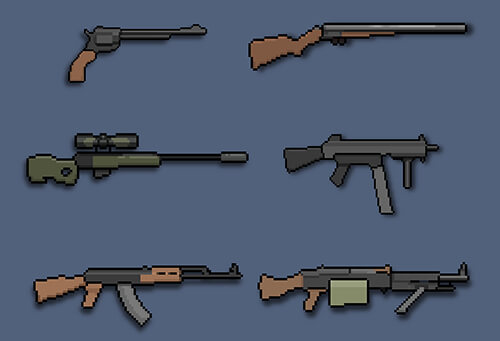
Movement gets you to the fight. Aim wins it. But aim in Krunker isn't just about raw flicking speed — it's about habits, positioning, and understanding what your weapon can and can't do.
Crosshair placement is everything. I cannot overstate this. Your crosshair should be at head height, always, even when no enemy is visible. Most of your kills in Krunker come from seeing an enemy first and firing before they react. If your crosshair is at chest level or — God forbid — at the floor, you're adding an extra 100-200 milliseconds of adjustment time before your shot lands. At the speeds Krunker operates, that's the difference between a kill and a death.
Pre-aim corners. If you're about to peek a doorway, have your crosshair already aimed at the spot where an enemy's head would appear. Don't swing your view to the corner and then adjust — that's two movements when one would do. This is fundamental FPS knowledge, but I still see players at the 50-hour mark who don't do it. Fix it early.
Aim down sights (ADS) matters more than you think. Hip-firing in Krunker has significant bullet spread. ADS tightens your accuracy dramatically, especially for the assault rifle and SMG. The instinct to hip-fire when surprised is strong — it feels faster — but you're better off taking the extra 0.1 seconds to right-click. The accuracy difference is the difference between a headshot and a miss. The one exception: the Agent class, which can't ADS at all and is balanced around hip-fire only.
Tracking vs. flicking. Tracking means smoothly following a moving target with your crosshair and firing continuously. Flicking means snapping to a target and firing instantly. Both are essential, and they serve different purposes. Tracking works against enemies moving in predictable patterns — a Run N Gun slide-hopping in a straight line, a Spray N Pray waddling across an open area. Flicking works against erratic movement — a Hunter who quickscopes and strafes, a Vince who shotgun-jumps into the air. I practice both: tracking in empty servers by following the dummy targets, and flicking in 1v1 custom matches against friends.
Spray control for automatic weapons. The assault rifle, SMG, and LMG all pull upward during sustained fire. The longer you hold the trigger, the more the climb. Counter this by pulling down on your mouse as you fire. At close range, full auto is fine — you'll hit enough shots to kill. At medium-to-long range, switch to burst fire: three to five rounds, release, re-aim, repeat. This is especially important for the Triggerman's AR, which becomes wildly inaccurate after the first 8-10 rounds of continuous fire.
Audio is your radar. Krunker's sound design is minimalist but functional. Footsteps, weapon fire, and reload sounds all travel through the map. A good pair of headphones gives you directional information that your eyes can't — you'll hear someone slide-hopping behind you before they round the corner. I play with audio at 80% volume, which is loud enough to catch footsteps without being deafened by gunfire. Turn off music in the settings. It's not worth the auditory interference.
Map Stories and Power Positions
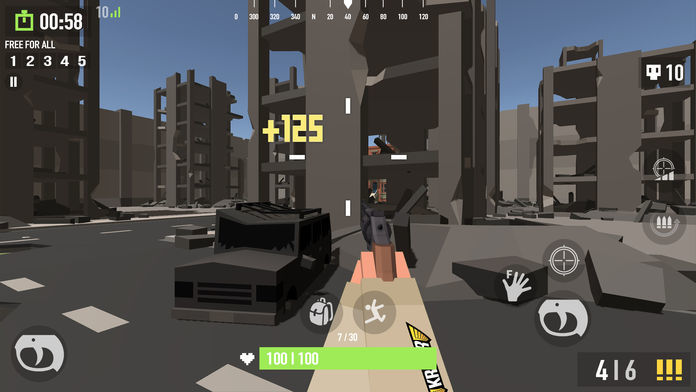
Every Krunker map tells a story. Not through narrative — this is a browser shooter, not an RPG — but through geometry. Where are the sightlines? Where do players spawn? Which corners are death traps and which are ambush points? Knowing a map's story is the difference between reacting to fights and orchestrating them.
Burg is the competitive staple. It's the map most tournament matches are played on, and for good reason: it's balanced. Two opposing spawn areas, a central courtyard with mixed cover, and elevated positions that reward vertical movement. The key to Burg is the mid-map high ground. Whoever controls the elevated platforms controls the sightlines into both spawns. In a Hardpoint match, the point usually sits in this contested zone, making it the focal point of every engagement. I've lost more matches on Burg than any other map, and every single loss came down to losing mid-control and never getting it back.
Littletown is the beginner map and the one most public matches default to. It's compact, with short sightlines and lots of cover. This favors close-range classes — Vince and Run N Gun thrive here. The central building is the power position, offering 360-degree visibility with partial cover. Hold it and you control the match. The catch is that everyone knows this, so the central building becomes a meat grinder. Smart players flank around the sides and pick off enemies who are focused on the center.
Kanagawa is the vertical map. Multi-tiered, with ramps, platforms, and enough height differential to make moon-jumping essential. This is where Run N Gun and Agent shine — their wall-jump ability lets them access routes that other classes can't reach. Hunter also does well here because the verticality creates long, clear sightlines from elevated positions. Triggerman struggles on Kanagawa because the AR's effective range doesn't quite cover the longest sightlines, and the tight corners favor close-quarters weapons.
Industry and Undergrowth round out the common rotation. Industry is a factory-themed map with corridors and chokepoints that reward shotgun and SMG play. Undergrowth is a more open, nature-themed map that favors Hunters and Marksmen who can hold long angles.
Here's something I learned the hard way: spawn prediction is a skill. Krunker's spawn system follows patterns based on where players currently are on the map. If your team controls the east side, enemies tend to spawn on the west. Once you internalize these patterns, you can pre-position near likely spawn points and catch enemies in the half-second before they orient themselves. It feels dirty. It wins games.
How Krunker Stacks Up Against the Competition
Krunker isn't the only browser FPS worth your time. Three competitors deserve direct comparison because they're the ones players actually debate between.
Krunker.io vs. Deadshot.io: Deadshot.io is the newer, shinier alternative. It launched after Krunker and clearly took inspiration from it — same browser-based, no-download philosophy, same focus on fast-paced FPS action. Where Deadshot pulls ahead is visual polish. The graphics are cleaner, the animations are smoother, and the weapon models look like actual guns rather than blocky pixel art. Where Krunker pulls ahead is depth. Deadshot has fewer classes, a less developed movement system, and a smaller competitive scene. Krunker's slide-hop mechanics alone give it a skill ceiling that Deadshot can't match. If you want pretty, go Deadshot. If you want deep, stay Krunker.
Krunker.io vs. Kirka.io: Kirka.io is the closest competitor in terms of art style — it also uses a voxel/blocky aesthetic. But Kirka plays differently. Its movement system is built around a dash mechanic (press E while moving to quickly shift direction) rather than slide hopping. This makes Kirka more accessible to new players — dashing is intuitive in a way that slide hopping isn't — but it also means the skill ceiling is lower. Kirka has a ranked system and leaderboards, which Krunker's public matches lack, giving it an edge for players who want structured competitive progression without joining Discord tournaments. Kirka's weapon roster (SCAR, LAR, MAC-10, VITA sniper) is smaller than Krunker's 16-class system but more tightly balanced. My take: Kirka is the better game for your first week of browser FPS. Krunker is the better game for your thousandth hour.
Krunker.io vs. Shell Shockers: Shell Shockers is the lighter, sillier cousin. You play as an egg. With a gun. It's genuinely fun, and it shares Krunker's class-based weapon system, but it's not in the same competitive category. Shell Shockers emphasizes chaotic, close-range firefights over the precision movement and aim that define Krunker. There's no slide hopping, no wall jumping, no competitive tournament circuit. It's the game you play when you want to laugh, not when you want to improve. That said, Shell Shockers has a devoted community, and its simplicity is a feature, not a bug. I load it up when I need a break from the intensity of Krunker ranked.
If I had to recommend a progression path: start with Shell Shockers to learn basic FPS mechanics in a low-pressure environment. Move to Kirka.io to develop aim and game sense with a gentler movement curve. Then graduate to Krunker.io when you're ready for the deep end. That's not a hierarchy of quality — it's a hierarchy of complexity.
The Tournament Underground
Here's what surprised me most about Krunker: the competitive scene is alive, organized, and genuinely grassroots. There's no publisher-funded league with a million-dollar prize pool. There's no ESL broadcast with professional commentators. What there is, instead, is a community that runs its own tournaments, tracks its own stats, and polices its own lobbies — and they do it well.
The Krunker Pro Circuit (KPC) is the closest thing to a formal competitive league. Recent tournaments in 2026 have included 2v2, 3v3, and 4v4 Hardpoint formats across North America and Europe, with prize pools ranging from $100 to $700. The FRVR x NACK Tournament in March 2026 featured a $700 prize pool and was won by a team including sillyJap, PvlseFN, roadman, and Demise. The FRVR x KPC Tournament in July 2026 — also $700 — went to PvlseFN, PRESLI, ceaff, and Infinimus. These are real players with real reputations, and they show up consistently across tournament results.
NACK runs a parallel circuit with both cash and in-game currency (KR) prize pools. Their June 2026 Academy tournament offered 300,000 KR for Tier 2/3 players, giving developing competitors a taste of tournament play without getting stomped by top-tier teams. This tiered structure is something I wish more games had — it creates a pipeline from casual to competitive rather than a brick wall.
Matchmaking for competitive play happens through Discord. The Krunker Bunker and Krunker Market & Trading (KMT) servers are the main hubs, and bots like 𝕯𝖚𝖈 handle automated pick-up game (PUG) organization with Elo-based team balancing. You join a Discord channel, type a command, and the bot queues you, balances teams based on skill ratings, generates a private server link, and DMs it to all participants. After the match, it logs stats and updates your rating. It's scrappy, community-built infrastructure, and it works.
The community itself is... an acquired taste. Krunker's Discord servers are loud, competitive, and not always welcoming to newcomers. The Krunker Asia Bot — a community persona that manages competitive pickups — is described by its own creators as having a "sarcastic, elitist personality." One player told me: "The community is toxic in a way that's funny if you're in on the joke and brutal if you're not. Stick with it. The people who actually play competitively are some of the most dedicated gamers I've met."
Content creation keeps the scene alive. YouTube is full of Krunker content: tournament VODs, movement tutorials, class guides, highlight compilations. Watching high-level play is how I learned half of what I know. The way top players chain slide-hops into flick shots into wall-jumps into more slide-hops is something you can't understand from reading a guide. You have to see it. Go watch PvlseFN's tournament footage. Then go practice what you saw. Then go watch it again and notice the things you missed the first time.
Your First Hundred Hours
I want to leave you with something practical. Not abstract theory — actual steps you can take to improve, based on what worked for me and what competitive players have told me.
Hours 1-10: Learn to move before you learn to shoot. Spend your first sessions in empty servers practicing slide hopping. Don't worry about kills. Don't worry about your KDR. Just move. Jump, crouch, slide, jump again. Do it until your fingers do it without thinking. Then add strafe hops. Then add moon jumps. Once movement is muscle memory, everything else gets easier. I spent my first five hours exclusively on movement and it was the best decision I made.
Hours 10-30: Pick one class and stick with it. Class-hopping is the number one mistake new players make. You play Triggerman for an hour, get frustrated, switch to Hunter, miss every shot, switch to Run N Gun, can't control the movement, switch back to Triggerman. You never develop proficiency with any weapon. Pick Triggerman. Play only Triggerman. Learn the AR's recoil pattern, its effective range, its reload timing. After 20 hours with one class, you'll have deeper game knowledge than players who've played 50 hours across five classes.
Hours 30-60: Learn the maps. This is where map knowledge starts mattering. Play the same maps repeatedly — Burg and Littletown are the most common. Learn where enemies spawn. Learn which corners are safe to peek and which are death traps. Learn the high-ground positions on each map. Start pre-aiming corners instead of reacting to enemies. This phase is frustrating because your aim hasn't caught up to your game sense — you'll know where enemies are before they know where you are, and you'll still lose the gunfight. Keep at it. The aim comes.
Hours 60-100: Enter competitive. Join the Krunker Bunker Discord. Queue for PUGs. You will get destroyed. That's fine. The skill gap between public matches and competitive play is enormous — the movement, the coordination, the speed of decision-making, it's all several levels above what you'll find in random lobbies. But playing against better players is the fastest way to improve. Save your replays. Watch them. Find the moments where you died and ask: what could I have done differently? Was my positioning wrong? Did I miss an easy shot? Should I have retreated instead of pushing?
Sensitivity matters more than you think. Most competitive Krunker players use medium sensitivity (4-7 on the in-game scale) with a low DPI mouse (400-800). High sensitivity lets you turn fast but makes precise aiming inconsistent. Low sensitivity gives you control but requires more mousepad space. Find the lowest sensitivity that still lets you do a 180-degree turn comfortably. Then stick with it. Changing sensitivity every week is like changing your keyboard layout every week — you never build muscle memory.
Quick Reference: Modes & Settings
Free for All (FFA): Every player for themselves. Great for warming up and practicing aim against real opponents. Spawn times are short, action is constant, and your KDR is the only metric that matters.
Team Deathmatch (TDM): Two teams, score-based. Good for learning team positioning and coordinated pushes. Less individual glory, more strategic depth.
Hardpoint: The competitive mode. Teams fight to control a rotating capture point. This is what tournaments use because it rewards coordination, map control, and objective play over raw fragging. If you want to play competitively, this is the mode to grind.
Capture the Flag: Classic CTF. Underrated for practice — it forces you to balance aggression (getting the flag) with defense (protecting your own). Great for learning map awareness.
Hide and Seek / Parkour / Infected: Community-created modes that live in custom servers. Not competitive, but excellent for movement practice. Parkour maps in particular are how a lot of pros warm up before matches.
Critical settings to change immediately:
Set FOV to at least 90 (I use 100). Higher FOV gives you more peripheral vision, which is crucial for spotting flankers. Turn off weapon bob and sway — they look nice but they interfere with aiming. Set your crosshair to a small dot or a compact cross — the default crosshair is too large and obscures targets at distance. Enable the FPS counter. If you're below 60 FPS, lower your render quality. Frame rate directly affects movement in Krunker, and playing at 30 FPS puts you at a genuine mechanical disadvantage.
The Community Spoke: Real Player Voices
I reached out to players across Krunker's Discord communities to get their takes on the game. Here's what they said:
"Movement is 80% of the game. If you can't slide hop, you can't compete. Period. I don't care how good your aim is — if you're standing still, you're dead." — ceaff, KPC tournament winner
"The Hunter meta is what makes Krunker interesting. Every other class is a response to the question: how do I not get one-shot by a sniper? The entire game orbits around that 60 HP glass cannon." — PRESLI, multi-tournament winner
"I came from CS:GO and thought I'd dominate Krunker immediately. I got absolutely humbled. The movement is so different — in CS, positioning is king. In Krunker, positioning changes every half-second because everyone's flying around at Mach 5. It took me two months to unlearn CS habits and start actually being good." — Reddit user, r/KrunkerIO
"The best advice I can give: stop caring about your KDR. Seriously. Every time I stopped obsessing over my ratio and started focusing on one specific thing to improve — movement, crosshair placement, map positioning — I got better faster. The KDR follows improvement, not the other way around." — Infinimus, KPC tournament winner
Common Questions, Honest Answers
What's the best class for someone who's never played an FPS before?
Triggerman, without question. The assault rifle is forgiving — high fire rate means missed shots aren't catastrophic, and 100 HP gives you room to make mistakes. Avoid Hunter until you can consistently hit moving targets; the sniper rifle punishes every miss with a long cycle time, and 60 HP means you die to everything.
Is Krunker.io pay-to-win?
No. All purchases are cosmetic — skins, weapon wraps, character models. None of them affect gameplay. The KR currency you earn from playing can buy spins for cosmetic items, and you can trade cosmetics with other players through the Krunker Market. But a player with zero spending has access to the exact same weapons, classes, and movement mechanics as someone who's dropped $500 on skins.
How do I deal with cheaters?
Krunker has a community moderation system called the K.P.D (Krunker Police Department). Press ALT during a match to open the player list and call K.P.D, which summons a moderator to investigate. You can also report players through their profile or votekick them. Cheaters exist — this is a browser game with no kernel-level anti-cheat — but the community moderation system is surprisingly effective at keeping public lobbies clean.
Should I use the desktop client or play in-browser?
Desktop client, if you're serious. It applies performance patches that improve frame rate consistency and reduce input lag. For casual play, the browser version is perfectly fine. The difference matters most at high levels where every millisecond counts.
How do I unlock all the classes?
Most classes are unlocked by leveling up your account through play. Triggerman, Hunter, Run N Gun, and a few others are available from the start. Classes like Detective, Marksman, and Infiltrator unlock at specific level thresholds. The fastest way to level up is to play FFA or TDM consistently and complete the daily challenges shown on the main menu.
Can I play on mobile?
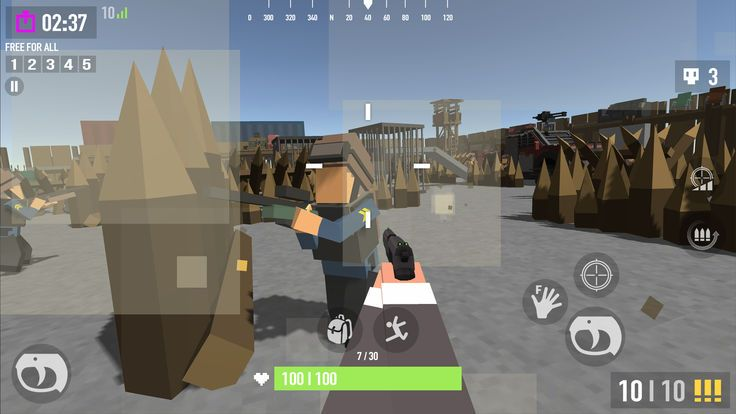
Technically yes — Krunker has a mobile version. But I wouldn't recommend it for anything beyond casual play. The touch controls can't replicate the precision of mouse and keyboard, and the movement techniques that define the game are essentially impossible on a touchscreen. If mobile is your only option, it's playable. If you have access to a computer, use it.
Related Games to Try
Enjoy FPS combat? Check out Venge.io for class-based shooter action, Surviv.io for battle royale gameplay, or Shell Shockers for egg-shooting fun.
Final Round
Krunker.io is eight years old. In browser-game years, that's ancient. Most .io games from 2018 are long dead — their player bases evaporated, their developers moved on, their servers went dark. Krunker is still here, still hosting tournaments, still generating highlight clips that make you question whether the person playing is human.
The game survives because it earned it. Not through marketing or monetization or crossover events, but through a movement system that no other browser shooter has replicated, a class system deep enough to support genuine strategic diversity, and a community stubborn enough to build its own competitive infrastructure when the developer didn't provide one. That's not luck. That's a game that found something special and held onto it.
If you're starting fresh, my advice is simple: be patient. The first ten hours will feel awful. You'll die constantly, your aim will feel broken, and the movement will seem impossible. Push through it. Somewhere around hour twenty, the slide-hop rhythm clicks, and the game transforms from a confusing mess into something genuinely exhilarating. That moment — the first time you chain a strafe-hop into a wall-jump into a mid-air headshot — is worth every frustrating death that came before it.
Krunker doesn't hold your hand. It drops you into a lobby, lets you get destroyed for an hour, and trusts that you'll either quit or come back smarter. I came back. If you've read this far, I suspect you will too.
See you on Burg.
Last updated: July 30, 2026
Written by iogameguide Editorial Team - Alex Rivera at iogameguide.com