Why TETR.IO Stands Out
I've played a lot of browser games. Most of them are flash-in-the-pan distractions — fun for an afternoon, forgotten by the weekend. TETR.IO is different. It's the rare browser game that has actual competitive depth, a player base that gives a damn, and a developer who seems to genuinely care about the experience.
For context: nearly 10 million registered accounts, over a billion games played, and an active Discord that rivals some small countries in population. Those numbers don't happen by accident. TETR.IO works because it takes the Tetris formula — which has been around since 1984 — and wraps it in modern competitive infrastructure: ranked matchmaking, replays, leaderboards, the works.
What I find most impressive, honestly, is the responsiveness. This is a game where milliseconds matter, and the fact that it runs in a browser tab without noticeable input lag is borderline sorcery. The developer, who goes by OSK, has put serious work into the netcode and the client. There's a desktop app too, if you want to squeeze out every last frame of performance — and at the top levels, you absolutely do.
But here's the thing that really hooked me: TETR.IO doesn't try to be "Tetris with a twist." There's no power-ups, no gimmicks, no microtransactions. It's pure Tetris, refined to a competitive edge. The depth comes from the mechanics themselves — SRS+ rotation, T-spins, back-to-back chains, the passthrough system. If you're willing to learn, the skill ceiling is stratospheric.
Editor's Note: I came to TETR.IO after years of casual Tetris on various platforms. I expected to mess around for a few hours and move on. Three months later, I was grinding Tetra League ranked matches at 1 AM and watching tournament VODs on YouTube. This game gets under your skin.
First Steps: Setup & Controls
Getting into TETR.IO is refreshingly simple. No downloads, no installers — just go to tetr.io and you're playing. But there are a few setup decisions worth making before your first real match.
Create an account. You can play solo modes without one, but I'd strongly recommend registering through the Tetra Channel. It unlocks ranked play, tracks your stats, saves replplays, and puts you on the global leaderboard. It takes about ten seconds.
Sort out your controls early. This is the single most important setup decision you'll make. The defaults are fine — arrow keys for movement, Space for hard drop, C or Shift for Hold — but you should customize them to fit your hand. I switched my rotation keys to Z and X early on, and it made a bigger difference than I expected. The Config menu lets you remap everything, including 180-degree rotation (which I'll talk about later — it's a game-changer).
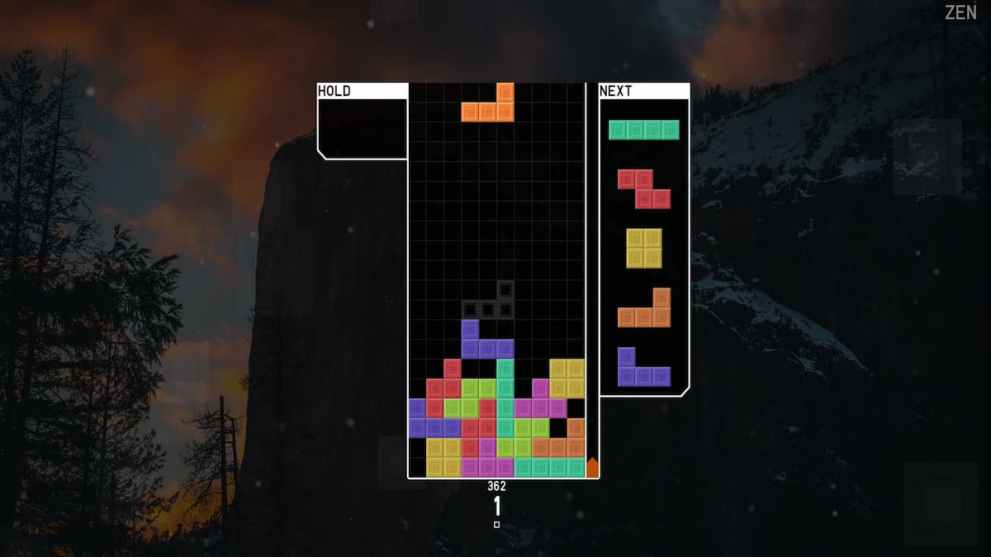
The interface is clean and that's intentional. You've got a 10×20 grid in the center, the Hold queue on the left, and the Next queue on the right showing five upcoming pieces. That's it. No clutter. Everything you need is visible at a glance, which matters when you're making split-second decisions.
Start with Quick Play. It's a 10-floor tower against AI opponents of increasing difficulty. Think of it as a tutorial that doesn't feel like one — you'll learn garbage line management, attack timing, and basic survival without the pressure of a real human on the other end. Once you can consistently clear floors 7-8, you're ready for Tetra League.
One more thing: if you're serious about improving, grab the desktop client. It's not strictly necessary, but the performance patches it applies make a noticeable difference in input consistency, especially on lower-end machines. You can find it linked on the TETR.IO homepage.
The Road from D-Rank to X-Rank
TETR.IO's ranking system runs from D (where everyone starts) through C, B, A, S, SS, and finally X — the top tier. Your position is tracked by TR (Tetra Rating), which goes up with wins and down with losses. The amount you gain or lose depends on your opponent's rating relative to yours, so beating someone ranked above you is worth more than stomping someone below.
I want to walk you through what the climb actually looks like, because the skills you need at each tier are fundamentally different.
D to C: Just don't top out. At this level, matches are won by whoever survives longer. Most players here can't stack efficiently, so the board fills up fast. Focus on keeping your surface flat and clearing lines consistently. You don't need T-spins or fancy openers — just clean, error-free play will carry you out of D within a few days.
C to B: Learn to downstack. This is where garbage management becomes critical. Opponents can now send lines at a pace that'll bury you if you're not careful. Downstacking — clearing garbage lines efficiently to dig yourself out of holes — is the skill that defines this tier. I spent two weeks stuck in high C because I kept building up instead of digging down. The moment I started prioritizing garbage clears over my own stack, I shot up to B.
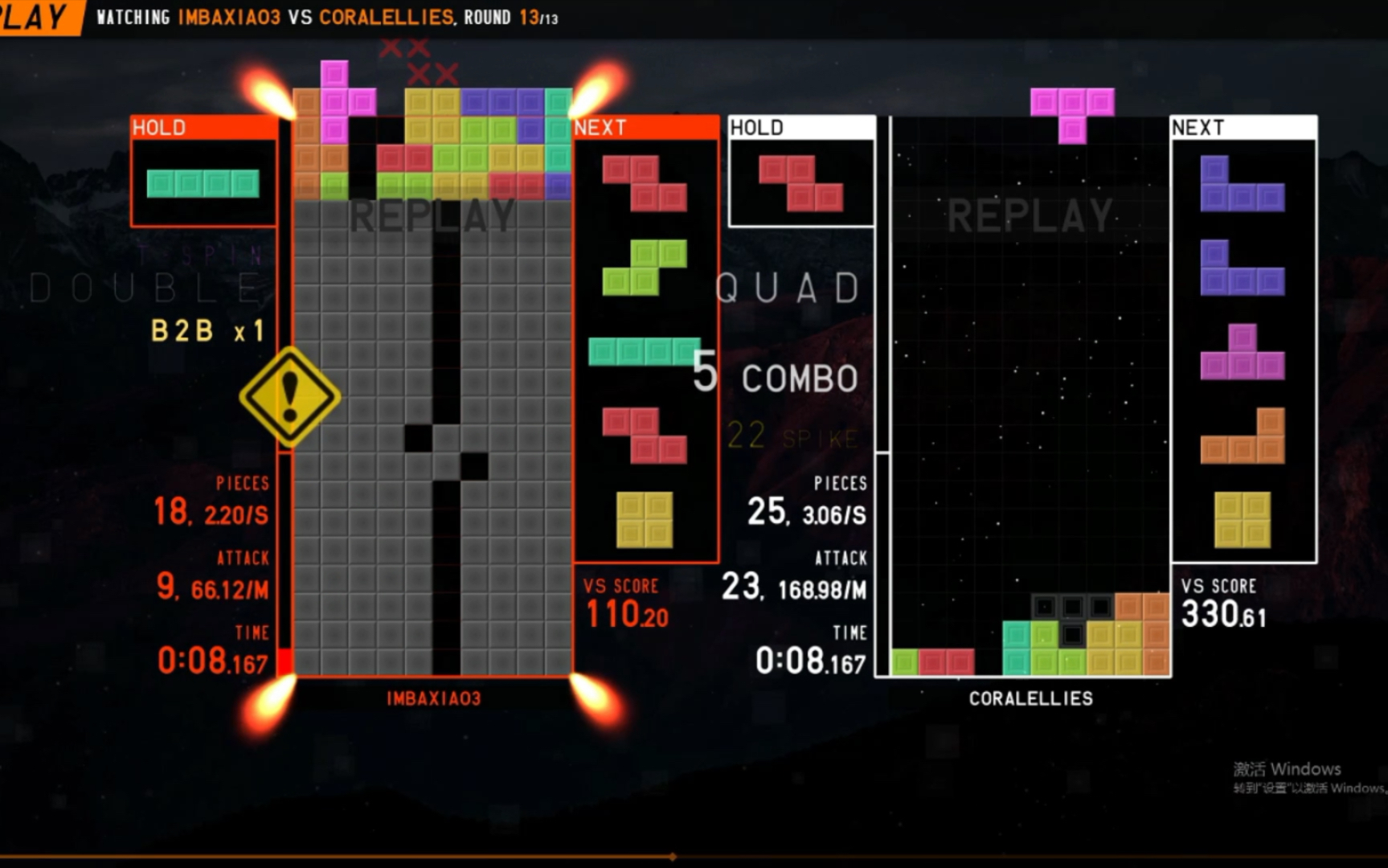
B to A: Speed and consistency. Players in B are competent but slow. To break into A, you need to increase your PPS (pieces per second) without sacrificing accuracy. This is pure muscle memory — your fingers need to know where each piece goes before your brain consciously decides. I practiced in Zen mode for about 30 minutes a day, focusing purely on placement speed. The improvement is gradual but real.
A to S: T-spins and openers. Here's where the game fundamentally changes. At A-rank, most players are fast and clean, so raw stacking speed isn't enough to differentiate. You need to learn T-spins (more on that in the next section) and at least one opening setup. The players in S-rank and above all use structured openings — if you're still freestyling your first 10 pieces, you're at a serious disadvantage.
S and beyond: The mental game. At this point, mechanical skill is table stakes. What separates S from SS from X is decision-making under pressure: when to attack, when to defend, how to read your opponent's board state, when to go for a risky perfect clear versus a safe double. This is the part of Tetris that's hardest to teach and most rewarding to learn.
Pro Insight: Don't rush the climb. I've seen too many players in the Discord try to brute-force their way to higher ranks by spamming games without analyzing their play. Save your replays. Watch the ones where you lost. Look for the moment things went wrong — was it a misdrop? A bad opener? A missed downstack opportunity? Ten minutes of replay review is worth more than an hour of mindless grinding.
T-Spins: The Technique That Changes Everything
If there's one technique that separates casual TETR.IO players from competitive ones, it's the T-spin. I'm going to spend some time on this because it's genuinely transformative — learning T-spins changed how I play the game more than anything else.
Here's the short version: a T-spin happens when you rotate a T-piece into a slot that it can't simply slide into, using the game's wall kick system to force it into place. The game detects this and awards bonus attack. A T-Spin Double sends 4 garbage lines (same as a Tetris), and a T-Spin Triple sends 6. Back-to-back T-spins get additional bonuses on top of that.
Now here's why that matters. A Tetris requires an I-piece and a column left open specifically for it. That's restrictive — you're essentially playing 9-wide for most of the game. T-spins, on the other hand, can be set up with almost any piece combination, and they're more flexible in where they occur on the board. A player who can consistently T-spin has a much more dynamic attack pattern than someone who only goes for Tetrises.
How to learn them: Start with the T-Spin Double, specifically the "TST" (T-Spin Triple) slot and the common TSD overhang setup. The basic idea is to create a shape where a T-piece can be rotated into a gap that's covered by an overhang. The SRS+ rotation system has specific kick tables that make certain rotations possible — the most important one is the "TST kick" where the T-piece rotates from a flat position into a vertical slot.
I'm not going to pretend this is easy. My first week of T-spin practice was genuinely frustrating — I kept messing up the setup or rotating at the wrong moment. But here's the thing: once it clicks, it clicks. After about two weeks of dedicated practice in Zen mode, I was hitting T-Spin Doubles in ranked matches without thinking about it.
Back-to-back (B2B) is where T-spins get scary. When you chain consecutive "special" clears (Tetrises, T-spins, or all-spins), each one gets +1 bonus attack. At B2B count 4 or higher, TETR.IO starts charging a "Surge Attack" — a delayed but powerful burst that can straight-up overwhelm an opponent who isn't ready for it. The top players maintain B2B chains for 10, 20, even 30+ consecutive clears. It's absurd to watch.
All-spins are the next frontier. TETR.IO also recognizes spins with S, Z, L, and J pieces. These "all-spins" sustain B2B chains just like T-spins, and they open up attack patterns that pure T-spin players can't access. The all-spin meta is still evolving — the community Discord has ongoing discussions about optimal setups, and new techniques are being discovered regularly. If you want to be on the cutting edge, this is where to focus.
Opening Setups That Actually Work in Ranked
In competitive Tetra League, your opening is your first statement. A clean opener gives you early attack pressure and sets the rhythm for the rest of the match. A sloppy one puts you on the back foot immediately.
There are three openers I'd recommend learning, in this order:
1. Perfect Clear Opener (PCO). This is the one I'd start with. The idea is to arrange your first several pieces so that you clear the entire board in one shot, sending a massive opening attack. The standard PCO works with most piece sequences and leaves you with a clean board to transition into your mid-game stack. It's not always optimal — some sequences don't allow a perfect clear — but when it works, it's devastating. I've won matches in the first 15 seconds with a clean PCO.
2. TKI Opening. Named after the Japanese player who popularized it, TKI is a flexible opener that quickly sets up a T-Spin Double and transitions into a standard Tetris stack. What I like about TKI is that it doesn't require a specific piece sequence — it adapts to what you get. It's less explosive than PCO but more consistent, which makes it better for longer matches.
3. DT Cannon. This is a T-Spin Triple opener that can be chained multiple times. It's harder to learn than the other two, but it generates the most consistent attack pressure. Top players use DT Cannon variations that chain into B2B T-spin sequences lasting 15+ moves. Honestly, if you can pull this off in ranked, you'll climb fast.
Here's my opinion, for what it's worth: too many players in the mid-ranks memorize an opener and then have no plan for what comes after. An opener is a starting point, not a strategy. If your PCO fails or your TKI gets disrupted by garbage, you need to be able to transition smoothly into mid-game stacking. Practice the transitions, not just the setups.
Editor's Note: The TETR.IO Discord has a dedicated channel for opener discussion with visual guides and sequence trees. If you're serious about learning these, that's the best resource I've found. The community there is surprisingly patient with newcomers — don't be afraid to ask questions.
Reading Your Opponent: The Mental Game
Here's something that took me way too long to figure out: TETR.IO is as much a psychological game as a mechanical one. At the mid-to-high ranks, most players can stack fast and hit T-spins. What separates the top players is their ability to read the opponent's board state and make strategic decisions based on it.
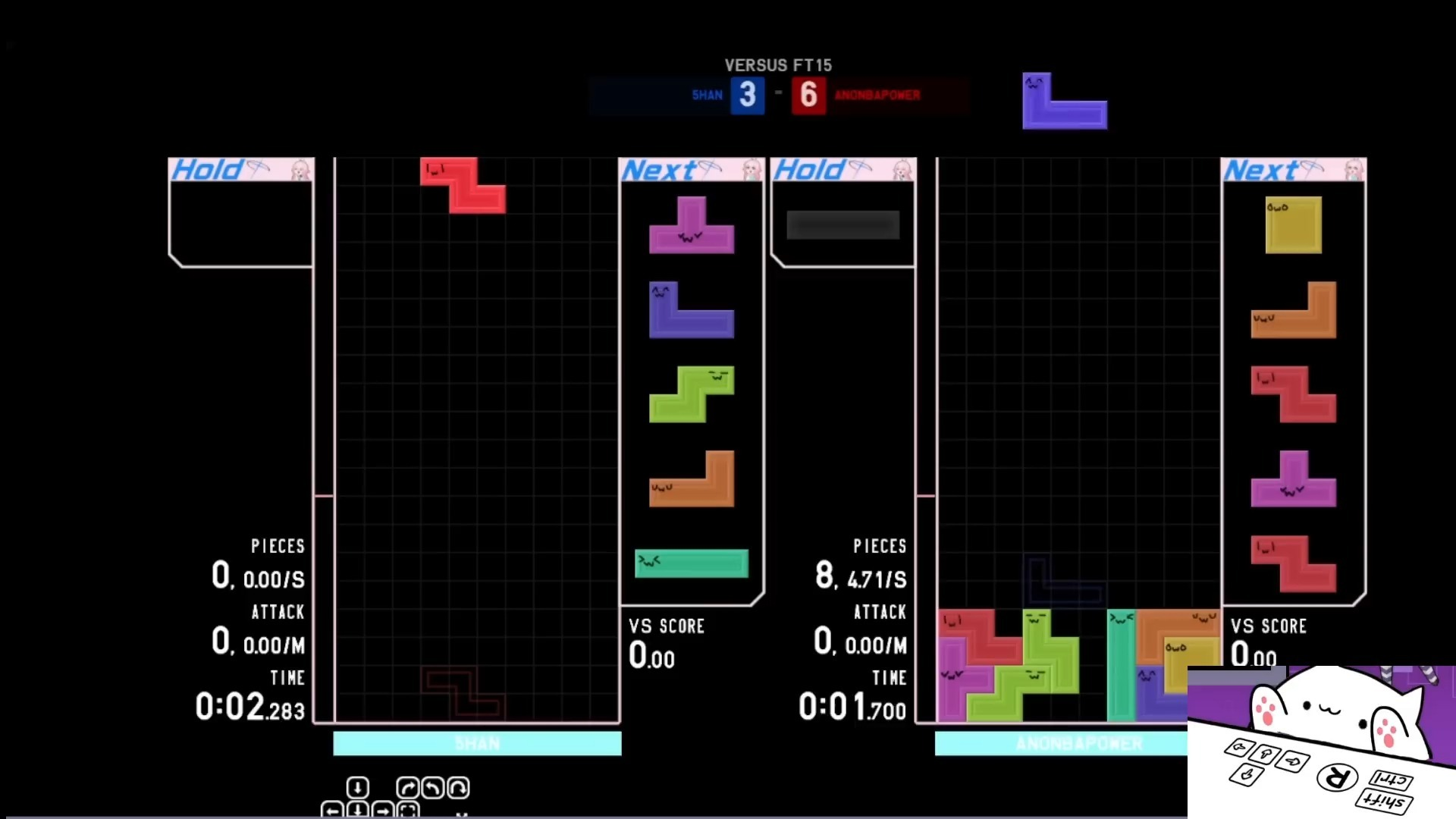
TETR.IO shows you a mini-view of your opponent's board during matches. Use it. If their board is tall and messy, they're under pressure — push harder. If their board is clean and short, they're setting up something big, and you need to either disrupt them or build your own attack fast.
Timing your attacks matters more than the attacks themselves. Sending 4 lines when your opponent is mid-stack is annoying. Sending 4 lines when they're about to top out is lethal. The passthrough mechanic makes this even more interesting — if you attack within 333ms of receiving garbage, your attack bypasses their garbage blocking system entirely. This creates these incredible moments where you're essentially racing to counter-attack, and the player with faster reflexes wins the exchange.
I've had matches where I was clearly outplayed mechanically — slower PPS, fewer T-spins — but won because I timed my attacks better. It's a bit like boxing: you don't have to throw more punches, you have to throw them at the right moment.
Know when to play safe. This is the hardest lesson. When you're behind, the temptation is to go for a big play — a perfect clear, a long combo chain, a risky T-spin setup. But big plays have big failure modes. If your setup gets disrupted by incoming garbage, you're in worse shape than before. Sometimes the right move is to downstack, stabilize, and wait for your opponent to make a mistake. Patience wins games.
Garbage targeting is its own skill. In TETR.IO's 1v1 format, all your attacks go to your opponent, but understanding how the system weighs factors like attack speed and recent activity helps you optimize your playstyle. In multi-player formats (custom rooms, certain tournaments), targeting becomes even more critical — focusing fire on a struggling player can eliminate them before they recover.
TETR.IO vs Jstris vs Puyo Puyo Tetris
If you're getting into competitive Tetris, you'll eventually encounter the "which platform is best" debate. I've spent significant time on all three major options, and they each have genuine strengths.
TETR.IO is the best all-rounder. Browser-based, free, accessible, with a huge player base and excellent matchmaking. The ranked system is well-designed, the replay system is top-notch, and the community is large enough that you can always find a match. Its weakness is that it's browser-based — even with the desktop client, it can't quite match the raw performance of a native application. But for 95% of players, this doesn't matter.
Jstris is the purist's choice. It's been around longer, has a smaller but extremely dedicated community, and is known for its low-latency gameplay. Many top TETR.IO players use Jstris for practice because of its configurable training modes and bot system. Where Jstris falls short is player population — queue times can be long at certain hours, and the ranked ladder is less populated than TETR.IO's. It also lacks some of the polish and quality-of-life features that TETR.IO has accumulated.
Puyo Puyo Tetris 2 (PPT2) is the console option — available on Switch, PlayStation, Xbox, and PC. It's the most "official" competitive Tetris, with actual tournaments and prize pools. The production value is high, with character animations, voice acting, and a story mode. But it's paid software, runs on a different rule set (no SRS+ wall kicks, different garbage mechanics), and the online matchmaking can be spotty. It's the best choice if you want to play on a console or participate in officially sanctioned events, but for day-to-day competitive Tetris, I'd still pick TETR.IO.
My take? Start with TETR.IO. If you get serious about competition and want a practice environment, add Jstris to your rotation. PPT2 is worth it if you're interested in the tournament scene or prefer playing on console. There's no wrong answer here — the best platform is the one you'll actually play on.
The Competitive Scene & Community
One of the things that keeps me coming back to TETR.IO is the community. It's large enough to be active but small enough that you start recognizing names. The official Discord server has thousands of members and is genuinely one of the better gaming communities I've been part of — helpful, knowledgeable, and refreshingly low on toxicity.
The tournament scene is alive and growing. Community-run tournaments happen regularly, ranging from beginner-friendly events to high-stakes competitions featuring top players. The TETR.IO Discord announces these, and there are also several community organizers who run events through other platforms. If you've ever wanted to try competitive Tetris, these tournaments are the lowest-barrier entry point — many have open brackets where anyone can sign up.
Reddit's r/Tetris community is another great resource. While it's not TETR.IO-specific, a large portion of the discussion centers on the game. You'll find technique breakdowns, opener guides, highlight clips, and meta discussions. I've picked up more than a few tricks from random Reddit threads that I couldn't find anywhere else.
Content creators keep the scene alive. There's a healthy ecosystem of TETR.IO content on YouTube — tournament VODs, technique tutorials, rank-up journeys, and highlight compilations. Watching high-level play is genuinely educational. You start to see patterns and decision-making that you can't pick up from text guides alone. I'd specifically recommend watching tournament replays from the top players — the way they handle pressure situations and adapt to different opponents is masterful.
The developer is engaged. OSK is active in the community, responds to feedback, and ships updates regularly. This matters more than people realize. A game with an absent developer stagnates; a game with an engaged one evolves. TETR.IO has received consistent updates since launch — balance adjustments, new features, performance improvements. The all-spin system, for instance, was a relatively recent addition that fundamentally changed the competitive meta, and it came directly from community discussion and developer iteration.
Quick Reference: Modes & What They're Good For
Here's a quick breakdown of each mode and when you should use it:
40 Lines: Sprint mode — clear 40 lines as fast as possible. Use this to practice pure speed and clean stacking. World records are in the low 30-second range, which is mind-boggling when you think about it.
Blitz: Two minutes, score as high as possible. Speed increases as you clear lines. Great for practicing under pressure — the escalating speed forces you to maintain accuracy at higher PPS.
Zen: Endless, no pressure, no top-out. This is your practice room. I spend most of my warm-up time here, drilling T-spin setups and testing new techniques before taking them into ranked.
Quick Play: 10-floor tower against AI. Good for beginners and for practicing garbage management without the stress of a real opponent. The achievement challenges (No Hold, Invisible pieces) add replay value.
Tetra League: The main event. Ranked 1v1 against players of similar skill. This is where everything you've practiced comes together. If you're reading this guide to improve at TETR.IO, this is the mode you're playing.
Custom Games: Create rooms with custom rules. Play with friends, practice specific scenarios, or experiment with weird settings. Underrated mode — some of the best practice I've had was in custom rooms with friends, drilling specific situations.
Final Thoughts
TETR.IO is the best competitive Tetris platform available right now, and I don't think that's a controversial opinion. It's free, it's accessible, it's deep, and the community is genuinely great. Whether you're here for casual Zen sessions or grinding toward X-rank, the game respects your time and rewards your effort.
If I could give one piece of advice to new players, it would be this: don't rush. Learn the fundamentals first. Get comfortable with stacking, downstacking, and basic speed before you worry about T-spins and openers. I see too many players in the Discord who can hit a T-Spin Triple but can't downstack their way out of a 4-line garbage attack. Fundamentals win games.
And honestly? Have fun with it. TETR.IO at its best is a flow-state game — that moment where your hands are moving faster than your conscious thoughts and everything just clicks. Chase that feeling. The ranks will come.
The game's only getting better. OSK keeps updating, the community keeps growing, and the competitive scene keeps evolving. Jump in, join the Discord, start climbing. I'll see you on the ladder.