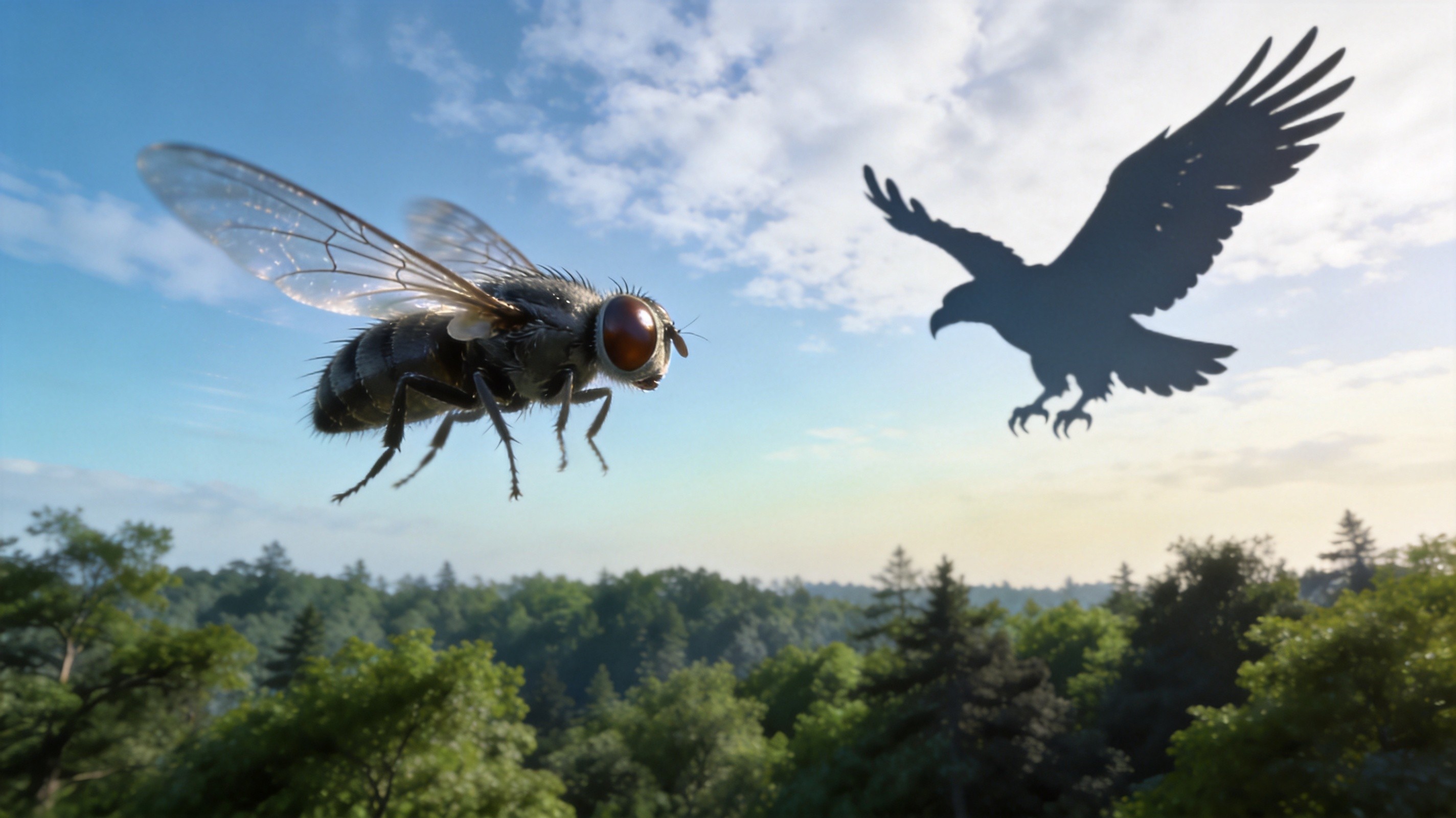
The Food Chain Doesn't Care About Your Feelings
I've been playing .io games since Agar.io first blew up, and I've sunk embarrassingly large chunks of my life into Slither, Diep, Mope, and a dozen others that have since faded into browser-game obscurity. But FlyOrDie.io — now officially rebranded as EvoWorld.io — is the one that keeps dragging me back. There's something uniquely raw about spawning as a literal fly, dodging a pigeon that's three times your size, and knowing that the only thing standing between you and becoming someone's lunch is a green-outlined berry and a prayer.
For the uninitiated: FlyOrDie.io is a free, browser-based multiplayer survival game where you start as the lowest creature on the food chain — a fly — and claw your way up an evolution tree of 45+ creatures, from insects to birds, predators, prehistoric monsters, dragons, and eventually cosmic entities and death gods. The core loop is dead simple: eat green-outlined food to gain XP, avoid red-outlined predators that can eat you, manage your water bar so you don't dehydrate, and evolve into progressively stronger forms. Each evolution unlocks a new special ability — a dash, a fireball, a regeneration aura — that fundamentally changes how you play.
What hooked me, honestly, is the tension. In most .io games, dying means respawning and starting over with a mild annoyance. In FlyOrDie, dying after spending twenty minutes grinding from a fly to a Dragon feels like genuine loss. You had something. You were powerful. And then a Phoenix you didn't see coming turned you into ash. That emotional whiplash — the soaring high of a fresh evolution followed by the stomach-drop of a sudden death — is what makes this game impossible to put down.
Editor's Note: I came to FlyOrDie expecting another ten-minute distraction. I've now logged over 300 hours. I've reached Grim Reaper exactly four times. I've died as a Dragon more times than I care to admit. This guide is everything I wish someone had told me before I started — not just the mechanics, but the mindset, the mistakes, and the moments that define whether you climb the food chain or become part of it.
From Fly to Butterfly: The Humiliation Phase
You spawn as a fly. Your diet? Dung and animal carcasses. Welcome to the bottom of the food chain — it's humbling, it's gross, and honestly, it's kind of perfect. The first five minutes of FlyOrDie are about one thing: surviving long enough to become something that isn't a fly.
Here's the thing about the early game that most guides gloss over: you're not just weak, you're blind. As a fly, your field of view is tiny, and every shadow on the minimap could be something that eats you. The minimap in the lower-right corner is your survival tool — green dots are food, red dots are threats. Learn to read it in the first two minutes or you won't make it to minute three.
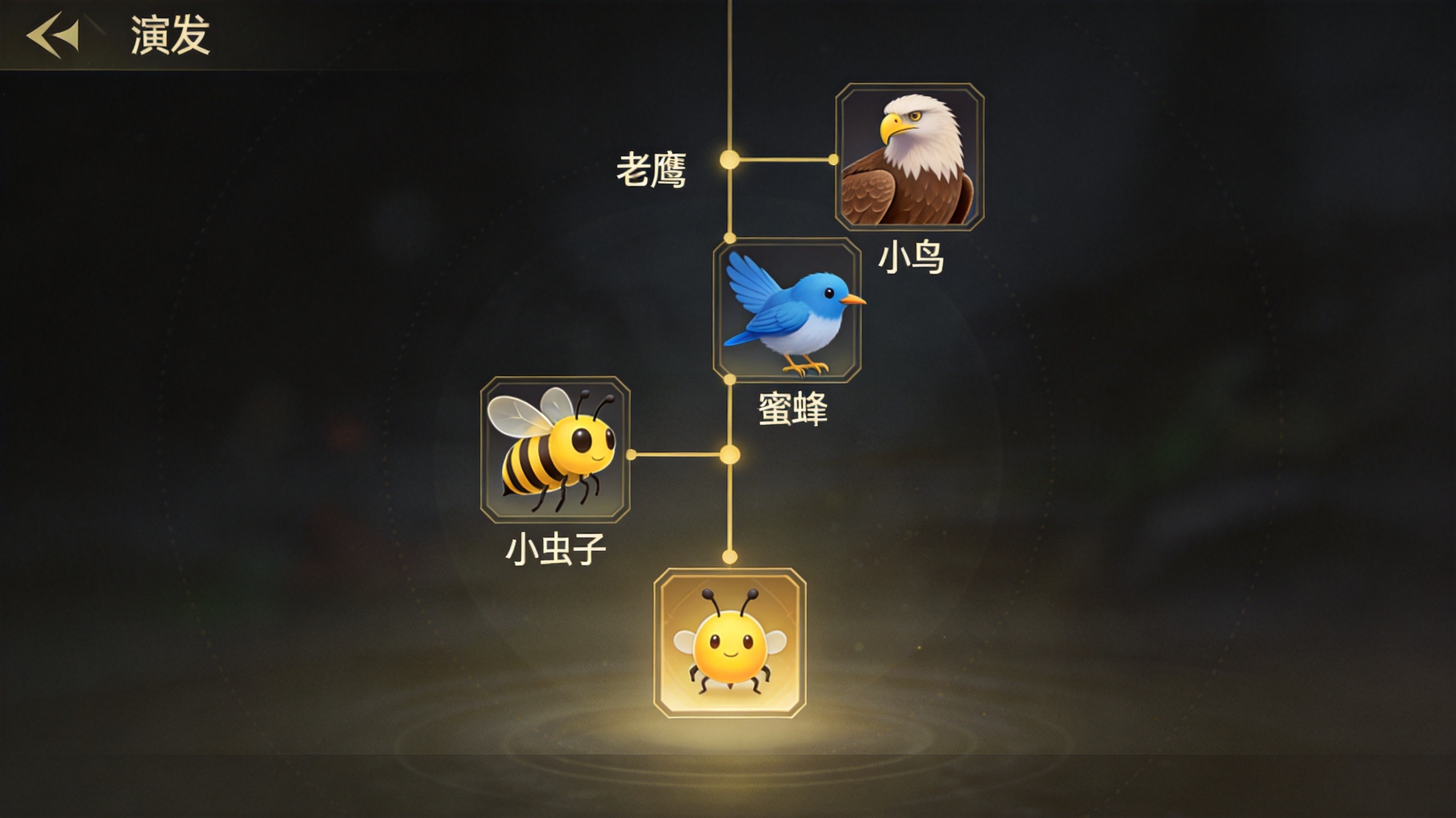
The fly phase is mercifully short. You need only 30 XP to evolve into a Butterfly, which means eating a few carcasses or dung piles. The Butterfly (50 XP) feeds on flower nectar, the Mosquito (70 XP) feeds on blood from larger animals, and the Wasp (140 EXP) can eat cherries and has a sting ability that deals light damage. Each tier is a tiny step up, but the predators get proportionally bigger too.
Let me save you some pain. Here are the four rules that will get you through the first five evolutions:
1. Water before food. The blue bar at the top-left is your hydration. Below 30% you slow down. Below 10% you start losing health. I've watched too many new players sprint toward a cluster of green food dots, ignore the water bar, and collapse mid-flight because they dehydrated. Water sources are scattered across the map — ponds, lakes, water drops. When you spawn, find water first. Always.
2. Use Beginner's Luck. As a fly, you have a passive ability called "Beginner's Luck" — a 50% chance to dodge a predator's attack. It's the only thing keeping you alive in the opening minutes. When a red-outlined creature approaches, don't panic-fly in a straight line. Stay close, let the dodge chance proc, and if it fails, then boost away with Space. Panicking early wastes your one safety net.
3. Evolve immediately. The moment your XP bar fills and the "Evolve" button appears at the bottom of the screen, click it. There is zero benefit to staying in a lower form. Every evolution grants a new ability and expands your food options. Waiting just gives predators more time to find you.
4. Never fly in a straight line. Predators — especially birds — are faster than you in a footrace. Your only advantage is agility. Zigzag, hug terrain, dive behind hills. A pigeon that's chasing you in a straight line will catch you. A pigeon chasing you through a forest canopy will lose you in two seconds.
Pro Insight: The Mosquito is the most underrated early evolution. You can feed on blood from larger animals — including other players. That means you don't have to hunt for specific food items; you just latch onto anything bigger than you and drain. I've gone from Mosquito to Dragonfly in under a minute by feeding on a Pigeon that was too busy eating bread to notice me. Parasitic? Yes. Effective? Absolutely.
Pigeon to Falcon: When the Game Stops Being Cute
Once you hit Pigeon (300 XP), the game shifts. You're no longer prey to everything that moves — you're now a predator yourself, but a small one. The Pigeon eats bread and worms. The Duck (350 XP) can swim and dive for fish. The Bluebird (400 XP) eats seeds. These mid-tier birds are where most players either start climbing confidently or hit their first wall.
The wall usually comes around the Bat (800 XP) or Blackbird (1,000 XP). Why? Because this is where the map opens up and the predator density spikes. Hawks (5,000 XP) and Eagles (2,400 XP) patrol the skies. A single Eagle can clear a biome of every Pigeon and Duck in it within seconds. I remember my first time reaching Bat — I was so proud, felt invincible, and then an Eagle materialized from the top of the screen and ended my run in half a heartbeat.
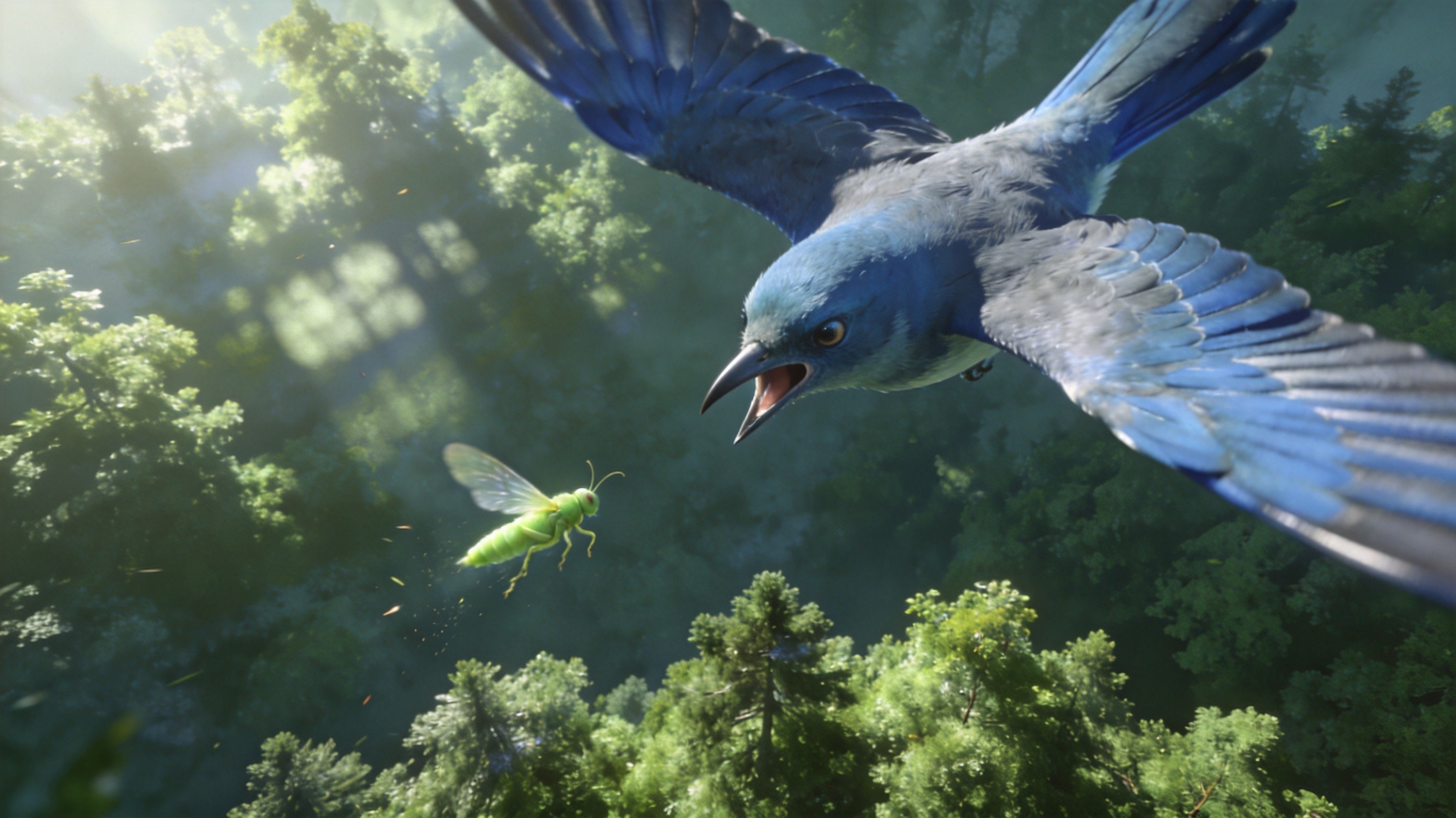
Here's where ability management becomes critical. Every creature from Bat onward has a special skill on a cooldown. The Bat has echolocation. The Hornet has a sting. The Falcon has a speed boost. The Vulture can scavenge — eat creatures recently killed by other players, which is basically free XP with zero risk.
I want to talk about the Falcon specifically, because it's the evolution that taught me how to actually play this game. The Falcon's speed boost ability is a get-out-of-jail-free card. It recharges on a short cooldown, and when activated, you rocket forward — useful for both chasing prey and escaping predators. But here's the mistake I made for weeks: I only used it defensively. I'd save it for when something was chasing me, which meant I was always playing reactively.
The shift came when I started using the speed boost offensively. I'd spot a Seagull (2,150 XP) — a juicy target — line up my approach, and fire the boost right as I entered its detection range. The burst closed the gap before the Seagull could react, and I'd eat it for a massive XP chunk. That one change — treating abilities as weapons, not just shields — cut my time-to-Dragon in half.
Pro Insight: The Vulture (600 XP) is a tier that most players skip through as fast as possible, but if you're patient, it's one of the best XP farms in the game. Dead creatures — killed by other players — appear as food that the Vulture can eat. In busy servers, there's always a kill happening somewhere. You just circle the map at altitude, watch the minimap for death indicators, and swoop in for free XP. Zero combat risk. It's boring, but it works.
The Biome Atlas: Where to Feast and Where to Die
The FlyOrDie map is not random chaos. It's a structured world with distinct biomes — Grassland, Forest, Desert, Arctic, Underground caves, Ocean, Volcano, and eventually Space and Hell — each with its own food sources, predator tiers, and survival rules. Understanding the map is the difference between a player who reaches Dragon in 20 minutes and one who's stuck at Hawk for an hour.
Let me walk you through the biomes that matter most during the mid-game, because that's where most players spend the bulk of their time.
Grassland: Your spawning ground. Low-tier food is abundant — berries, worms, bread. Predator traffic is moderate. This is where you'll spend your first five evolutions. Leave once you hit Pigeon; the XP density drops off and the risk-to-reward ratio flips.
Forest: Mid-tier heaven. Insects, small birds, and the food they eat are everywhere. The canopy provides cover from aerial predators. But the Forest also attracts mid-tier hunters — Hornets, Owls, Blackbirds. It's high-risk, high-reward. I recommend the Forest for the Pigeon-to-Bat range.
Desert/Pyramid area: Quieter than the Forest, which means fewer predators but also sparser food. The Turkey evolution (750 XP) is uniquely suited to this biome — it eats underground worms near the pyramids. If the server is crowded and the Forest is a death trap, rotate to the Desert.
Arctic: Home of the Snowy Owl (5,000 XP). Cold-climate food spawns here that doesn't appear elsewhere. The Arctic is typically low-traffic, which makes it a good hiding spot when you're being hunted. Just don't linger if you're a cold-blooded creature — some evolutions can't survive here for long.
Underground/Caves: Bat territory. Dark, cramped, and perfect for creatures with echolocation or night-vision abilities. The caves connect to deeper areas where Stone Eaters (15,000 XP) and Swamp Monsters (35,000 XP) live. If you're a Bat or Mad Bat, the caves are your safe zone — most aerial predators won't follow you in.
Here's the real strategic insight: biome-hopping is the meta. The best players don't camp one area — they rotate. You farm the Forest until a Hawk shows up, rotate to the Desert to cool off, then swing back to the Forest when the Hawk leaves. Staying mobile keeps your XP intake steady while making you a harder target for predators who patrol fixed routes.
I learned this the hard way. I used to pick a biome and stick with it until I either evolved or died. My survival rate was maybe 30%. Once I started rotating — spending no more than 2-3 minutes in any one area before moving — my survival rate jumped to about 70%. The map is your shield. Use it.
Hawk to Dragon: The Desperate Climb
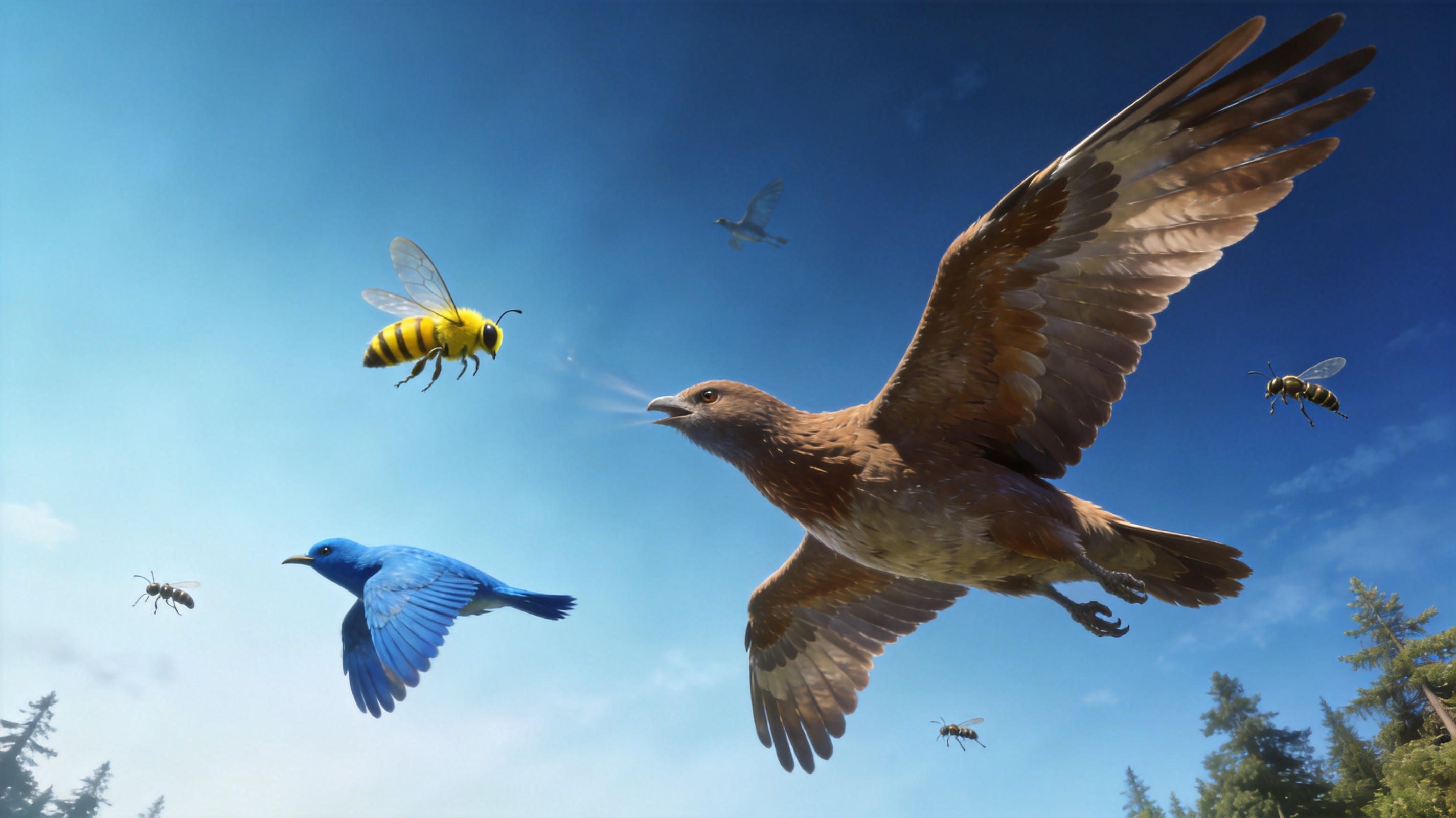
The Hawk (5,000 XP) is where the game stops feeling like a casual browser game and starts feeling like a survival horror. You're powerful — a genuine predator — but the creatures above you on the food chain are terrifying. Ravens (8,000 XP), Mad Bats (10,000 XP), Pterodactyl Children (10,000 XP), and eventually the Dragon (25,000 XP) and Phoenix (40,000 XP) are all hunting in the same airspace.
The grind from Hawk to Dragon is the longest and most dangerous stretch in the game. You're looking at 20,000 XP of progress, and every creature in that range has a specialized ability that can end you. The Pterodactyl has enormous HP. The Swamp Monster can camouflage underwater. The Stone Eater lives deep underground where you can't follow.
Let me share a match that crystalized everything for me. I was a Raven — 8,000 XP, omnivorous, fast, decent ability. I'd been grinding for about fifteen minutes, carefully rotating between the Forest and the Desert. My XP bar was at about 60% toward Mad Bat. And then I saw it: a freshly killed Pterodactyl Child, its body still on the ground, unclaimed. That was 10,000 XP of free food sitting in the open.
I dove for it. But I wasn't the only one who saw it. A Hawk came in from the left, a Seagull from the right, and somewhere above me — I didn't see this part — a Dragon was circling. I ate the carcass, got the XP, evolved to Mad Bat on the spot. And then the Dragon descended.
The Mad Bat is fast in darkness but can't drink water — you have to evolve quickly or you'll dehydrate. So I'm flying blind, no water source, a Dragon on my tail, and I need to find enough XP to reach Pterodactyl Child before I dry out. I made it. Barely. I found a cluster of Ravens near the cave entrance, ate two of them, and evolved. The Dragon lost interest and peeled off toward the Volcano.
That match taught me three things. First, carcasses are gold — always watch the minimap for death indicators. Second, never eat in the open without checking your surroundings first. Third, the Mad Bat's water limitation is brutal — plan your evolution chain so you don't get stuck in a form that can't hydrate.
Editor's Note: The Mad Bat (10,000 XP) is one of the most polarizing evolutions in the community. On the FlyOrDie subreddit, players either love it or hate it. The speed in darkness is incredible, and the ability to navigate caves gives you a safe zone that most predators can't access. But the inability to drink water means you're on a timer the moment you evolve. My advice: only take the Mad Bat path if you're already near a food-rich cave system. If you evolve into a Mad Bat in the middle of the Grassland, you're dead before you find your next meal.
The Dragon (25,000 XP) is the payoff. Fireball ability. Can swim in lava. Can eat demon eggs. It's the first evolution where you genuinely feel like the apex predator — most creatures on the map are now your food. But the Dragon is also where the game's difficulty spikes again, because above the Dragon sits the Phoenix (40,000 XP), and above that, the cosmic tier.
FlyOrDie vs EvoWars vs Mope.io: The Evolution Showdown
If you've spent any time in the .io game space, you know that "evolution-based survival" is practically its own subgenre at this point. FlyOrDie.io, EvoWars.io, and Mope.io are the three big names, and I've put serious time into all three. They share the same DNA — eat to grow, avoid bigger things, become the biggest thing — but they play fundamentally differently.
FlyOrDie.io (EvoWorld.io) is the most structured of the three. The evolution tree is fixed — 45+ creatures with specific XP thresholds, specific food sources, and unique abilities. You always know what you're working toward. The water and oxygen management systems add a survival layer that the other games don't have. And the biome system — Forest, Desert, Arctic, Underground, Space, Hell — gives the map a sense of progression that feels like an actual journey, not just a flat arena. The weakness? The fixed tree means less replay variety. Once you've memorized the evolution path, the early game can feel repetitive.
EvoWars.io takes a different approach. Instead of a fixed evolution tree, your character grows continuously — every kill makes you bigger and changes your weapon, but there's no branching path or ability selection. It's more action-oriented, more combat-focused, and faster-paced. Matches are shorter, deaths are more frequent, and the skill ceiling is lower. EvoWars is the game you play when you want instant gratification — spawn, fight, die, repeat. FlyOrDie is the game you play when you want a sense of progression and investment.
Mope.io is probably the closest comparison. It has a similar evolution tree, biome-based map, and survival mechanics. But Mope.io leans harder into the animal-kingdom theme — every creature is a real animal, and the abilities are grounded in biology (lions roar, crocodiles snap, etc.). FlyOrDie goes wild with fantasy creatures — Dragons, Phoenixes, Grim Reapers, cosmic entities. That tonal difference matters. Mope.io feels like a nature documentary with PvP. FlyOrDie feels like a fever dream where a fly can become a death god.
My verdict? FlyOrDie.io has the deepest progression system and the most satisfying evolution moments. EvoWars is better for quick, adrenaline-fueled sessions. Mope.io is the best choice if you want a more grounded, animal-themed experience. They're all good at what they do — but if you're the type of player who gets invested in long-term progression and doesn't mind losing 20 minutes of progress to a single mistake, FlyOrDie is the one that'll keep you coming back.
One thing FlyOrDie does that the others don't: bonus codes. The developer, Pixel Voices, regularly releases codes (like "skybs" or "IMDAMACIK") that give a 40% XP boost or premium rewards. Enter them in the menu before you start playing. That boost is the difference between reaching Dragon in 15 minutes versus 25. I check the FlyOrDie subreddit and Discord before every session to see if new codes have dropped.
The Reaper Grind: War Stories from the Top
The endgame of FlyOrDie.io is where the community lives. Past the Dragon and Phoenix, you hit the cosmic tier — Cosmic Insect (15,000 XP), Cosmic Big Eye (12,000 XP), Cosmic Bat (35,001 XP) — and then the demonic tier: Ghost (20,000 XP), Ghostly Reaper (14,999 XP), Demonic Imp (25,000 XP), Demonic Bat (30,000 EXP). And at the top, the Grim Reaper, which requires an effectively infinite amount of XP and account-level progression.
I've reached the Reaper tier exactly four times. Each time felt like a boss run in a Souls game — hours of careful, grinding progression, one mistake away from losing everything. The community around this tier is small, dedicated, and more than a little unhinged.
"The first time I hit Reaper, I cried," a player who goes by SkyHunter told me on the FlyOrDie Discord. "Three hours of my life, and I knew the second I spawned back as a fly that I'd never get that time back. But I immediately started another run." That about captures it.
Another regular, who posts as VultureKing on the subreddit, shared a strategy that I'd never considered: "Play on low-population servers. The Reaper grind is about XP efficiency, not combat. Fewer predators means fewer deaths. I switch servers until I find one with under 30 players." This is genuinely good advice that I'd ignored for months because I assumed more players meant more prey. More players also means more Dragons and Phoenixes, which means more ways to die.
The content creator JeromeACE, who has one of the most popular FlyOrDie YouTube channels, regularly posts runs at Level 999 and Level 9999 with Reaper evolutions. Watching his footage taught me more about positioning and ability timing than any text guide could. The way he uses the Dragon's fireball to zone predators — not to kill, but to create space — is a technique I'd never figured out on my own. His videos are long, sometimes 20+ minutes, but if you're serious about the Reaper grind, they're required viewing.
Pro Insight: The cosmic and demonic tiers introduce a new mechanic: some creatures can't be killed by anything except a higher-tier Reaper. This creates a strange dynamic where the top of the food chain is essentially a PvP-only zone. If you're a Ghost or a Demonic Bat, you're safe from everything except other ghosts, reapers, and cosmic entities. Use that window to farm XP aggressively — you're invulnerable to 90% of the server. But the moment another Reaper-tier player shows up, it's a duel, and account level matters. A Level 50 Reaper will lose to a Level 200 Reaper every time.
What I'd Tell My Fly Self
If I could go back to my first day playing FlyOrDie.io — that confused fly circling a pond, getting eaten by a pigeon within 30 seconds — here's what I'd say:
Stop chasing every green dot you see. Not all food is worth the risk. A berry next to a predator's patrol route is a trap, not a meal. Learn to evaluate food by its context, not just its proximity.
Your ability is not an emergency button. It's a tool. Use it proactively — to close gaps, to secure kills, to create safe feeding windows. The players who reach Reaper aren't the ones who never die; they're the ones who die less often because they use their abilities to control the pace of the game.
The minimap is your best friend and you're ignoring it. I spent my first 50 hours barely glancing at it. Once I started actively monitoring it — checking every 5-10 seconds for red dots, planning routes around predator concentrations — my survival rate doubled. The information is right there. Use it.
Don't get attached to your current form. Every evolution is temporary. The Dragon is not the finish line — it's a stepping stone. The players who stall out at Dragon are the ones who treat it as a destination rather than a phase. Keep moving. Keep eating. Keep evolving.
And finally: accept that you will die. A lot. Sometimes unfairly, sometimes stupidly, sometimes because a Phoenix appeared from literally nowhere and you had zero time to react. That's FlyOrDie. The game doesn't promise fairness. It promises that every death teaches you something — about positioning, about awareness, about which biomes to avoid at which evolution tiers. The players who reach Reaper aren't the most talented. They're the most stubborn.
FlyOrDie.io is the kind of game that doesn't respect your time and somehow makes you grateful for it. It's frustrating, addictive, occasionally unfair, and deeply satisfying when everything clicks. I've played hundreds of .io games, and this is the one I keep coming back to. There's nothing quite like the feeling of starting as a fly on a pond and ending the session as a cosmic death god who eats other players for breakfast.
Jump in. Start as a fly. See how far you can climb. And when a Dragon ends your best run in two seconds flat — and it will — just remember: the food chain doesn't care about your feelings. It never did. That's what makes it fun.