Introduction
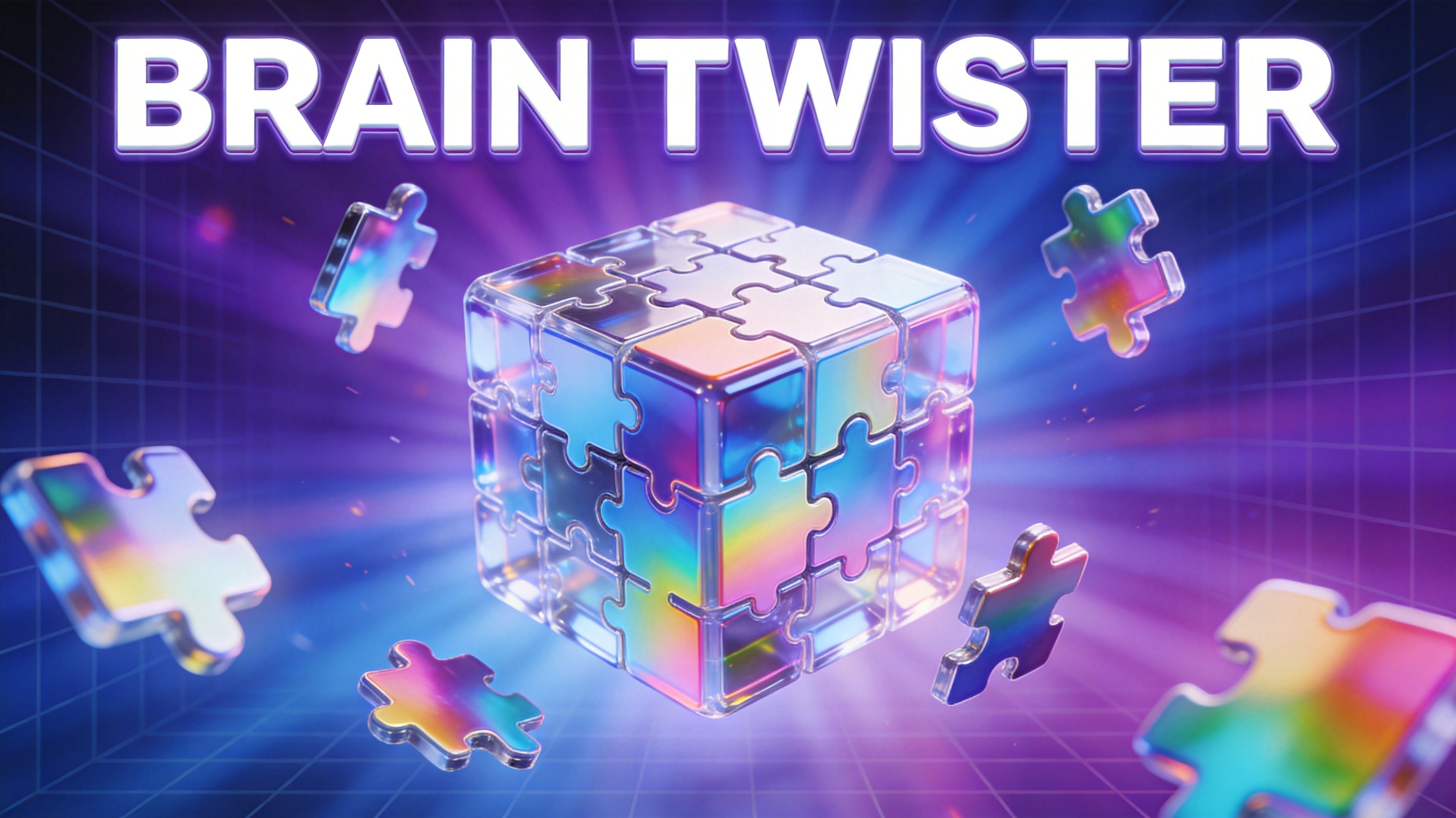
Brain Twister is an innovative 3D logic puzzle game that brilliantly combines the spatial mechanics of a Rubik's Cube with the visual satisfaction of a jigsaw puzzle. Instead of just matching solid colors, players must rotate a complex structure of interconnected, geared cubes to reconstruct a scrambled image. What makes this game truly unique is the gear mechanic; rotating one section often triggers cascading movements in adjacent cubes, adding a deep layer of strategic planning. Players love Brain Twister because it offers a highly rewarding visual payoff when the hidden image finally clicks into place, alongside the mental stimulation of solving a multi-layered 3D puzzle in the fewest moves possible. It is a perfect test of spatial awareness.
Getting Started

Starting your journey in Brain Twister is straightforward, but mastering the mechanics requires patience. To begin, simply load into a level and observe the scrambled 3D cube structure. Your primary control is the mouse; click and drag on the cube faces or use the on-screen rotation arrows to twist the interconnected geared sections. When you rotate one geared cube, pay close attention to how it drives the movement of neighboring cubes. Your main objective is to align the fragmented image pieces across the cube's faces. In the early levels, start by focusing on completing one face or a specific section of the image at a time. Don't worry about the move count initially; instead, familiarize yourself with how the gears interact. Once you understand the basic cause-and-effect of your rotations, you can begin planning your moves to reconstruct the full picture efficiently.
Basic Tips
1. Understand the Gear Ratios: Before making a move, mentally trace how one turn affects adjacent cubes. For example, turning a central gear might rotate two side gears in the opposite direction. 2. Focus on Corners and Edges: Just like a traditional jigsaw, start by identifying and aligning the corner and edge pieces of the scrambled image. These provide a solid framework for the rest of the puzzle. 3. Use the Fewest Moves Constraint: Keep an eye on your move counter. If a sequence requires excessive twisting, backtrack and look for a more direct gear alignment. 4. Rotate the Camera: Don't get tunnel vision. Use the camera controls to view the 3D structure from multiple angles, ensuring you aren't misaligning the back faces while fixing the front. 5. Solve Layer by Layer: Instead of trying to fix the whole image at once, isolate one layer, lock it in, and then move to the next without disturbing your completed work.
Advanced Strategies

1. Algorithmic Sequencing: Develop specific move sequences that cycle three image pieces without disrupting the rest of the solved faces. This is crucial for late-game adjustments when only a few fragments are out of place. 2. Reverse-Engineering the Gears: When faced with a highly scrambled image, mentally reverse the gear connections from the target image back to the current state. This helps you identify the exact sequence of twists needed to undo the scramble. 3. Minimize Cascading Disruptions: Advanced players plan moves that utilize the gear connections to their advantage. Instead of fighting the cascading movements, set up your twists so that the forced rotations of adjacent cubes actually help align other parts of the image simultaneously. 4. Optimize Move Efficiency: To achieve top leaderboard scores, practice look-ahead. While executing a current sequence, visually track where the next set of image fragments will land, allowing you to chain moves seamlessly.
Pro Tips

1. Memorize Gear Cycles: Learn the exact rotational cycle of the complex gear clusters in later levels. Knowing that a specific gear requires exactly three turns to return to its original state saves unnecessary moves. 2. Exploit Symmetrical Images: If the target image has symmetrical elements, use them to your advantage. You can often solve half the puzzle and mirror the gear rotations for the other half, cutting your required moves significantly. 3. The Setup and Restore Technique: If you need to move a specific image fragment into place but it requires breaking a solved section, use a setup sequence to move the target, apply the fix, and then perfectly reverse the setup sequence to restore the broken section.
Conclusion
Brain Twister offers a brilliant, mind-bending experience that pushes the boundaries of traditional 3D puzzles. By combining the mechanical depth of geared cubes with the visual reward of a jigsaw puzzle, it delivers a deeply satisfying challenge. Whether you are looking to casually train your brain or compete for the lowest move count on the leaderboards, this game has something for everyone. Give it a spin, trust your spatial reasoning, and enjoy the satisfaction of watching the scrambled image finally come together!