Why This Fish Game Refuses to Die
I'll be honest with you: when I first loaded Aquar.io three years ago, I expected another forgettable browser game. The io genre was already saturated with Slither.io clones and Agar.io knockoffs, and the thought of yet another "eat stuff, get bigger" simulator didn't exactly thrill me. But Aquar.io did something that most io games never bother to do — it gave me a reason to care about the thing I was controlling.
See, in most io games, your organism is disposable. You die, you respawn, you start over. No big deal. Aquar.io flips that script by making your Queen fish the single most important entity on the screen. If she dies, you're done. Not "respawn with a penalty" done — actually done, match over, thanks for playing. That changes everything about how you approach the game. Every engagement becomes a calculated risk. Every retreat is a strategic decision, not cowardice. And every evolution feels earned because you bled for it.
The game is developed by S3Games and serves as the sequel to Oceanar.io, which was already a cult favorite in the io community. What Aquar.io adds on top of that foundation is a five-tier evolution system for your Queen, a roster of specialized marine units you can recruit, and combat that rewards positioning and timing over raw size. The result is a game that plays more like a real-time strategy sketch than a typical io grind — you're managing an army, not just a blob.
And it still pulls players. The Top 1000 leaderboard is active, servers are populated across multiple regions, and the community — small but fiercely dedicated — keeps finding new angles on a game that S3Games has largely left to run on its own momentum. There's something admirable about that. Aquar.io doesn't need constant updates or a battle pass to stay relevant. It just needs players who understand that the best io games are the ones where your decisions actually matter.
Editor's Note: I came back to Aquar.io in 2026 after a long break, fully expecting it to be a ghost town. Instead, I found populated servers, a wiki community still maintaining detailed evolution charts, and gameplay that held up better than half the "new" io games I've reviewed this year. Some games don't need sequels. They just need players who get it.
Your First Five Minutes: Don't Panic

You spawn as a Tier 1 Queen fish. She's small, she's alone, and she has exactly one heart. This is the most vulnerable you will ever be in Aquar.io, and the game doesn't do much hand-holding to get you through it.
Here's what you need to internalize immediately: your mouse pointer directs the Queen. Everything else — your school of fish, your combat units, your defensive line — follows from where she goes. Think of her as the king in chess. Powerful in her own right once evolved, but catastrophically important. Lose her and the game ends on the spot.
The controls break down into three actions, and the distinction between them is the first thing that separates good players from dead ones:
Left mouse button or W key — Attack. Hold this to send your school into combat mode. Your fish will swarm toward enemies and hostile creatures. Simple enough, but the timing of when you release matters — pulling your school back at the right moment can save them from getting chewed up by a larger enemy school.
Right mouse button or Space (short hold) — Merge. This is the combat multiplier. A short hold consolidates your scattered fish into a tighter, denser formation. Merged fish hit significantly harder and survive longer in fights. If you're about to engage an enemy school of similar size and you haven't merged, you're basically throwing your fish away.
Right mouse button or Space (long hold) — Devour. This is the one that confuses new players. Holding the merge button longer causes your Queen to start eating her own school members. Sounds brutal, right? It is. But each fish she devours grants experience points, and those XP are what drive her evolution through five distinct tiers. You're sacrificing your army to upgrade your most important unit. The tension between keeping a large school for defense and devouring it for evolution is the core strategic loop of Aquar.io.
Also: use your scroll wheel to zoom. The game auto-zooms outward as your school grows, which is helpful for situational awareness but can make precision movement difficult. When you're threading your Queen through a tight gap between two enemy schools, zoom in. When you're scanning for food or threats, zoom out. This sounds obvious, but I've watched dozens of players in Spectate mode who never touch the scroll wheel and pay for it.
One more thing before we move on. You can change your school's color using the arrow buttons on either side of the logo before you spawn. I mention this not because it's strategically critical (it isn't), but because in chaotic fights with multiple schools on screen, being able to instantly identify your fish by color can save your Queen's life. Pick something bright and distinct. Hot pink works. So does electric green. Just don't go with a color that blends into the background.
The Queen's Five Lives: An Evolution Deep Dive
The evolution system is what separates Aquar.io from every other ocean io game out there. Your Queen doesn't just get bigger — she transforms, gains new abilities, and fundamentally changes how you play. Let me walk you through each tier, because understanding the trade-offs at each stage is the difference between a player who survives twenty minutes and one who crashes the leaderboard.
Tier 1 — "Little Fish in a Big Ocean" (Starting Tier, 1 Heart). This is your birth state. The Queen produces basic Guppies — your standard foot soldiers — whenever she eats food. You're fragile, you're small, and your school is weak. The only goal here is survival and steady growth. Eat food, collect neutral fish, avoid everyone bigger than you. Think of this tier as the crawl before the walk. Don't fight anyone. Don't be a hero. Just eat.
Tier 2 — "Bigger and Bumpier" (Requires 200 Score, 2 Hearts). The first milestone. Your Queen gets a second heart, which means she can survive one more hit before dying. This is the tier where you can start thinking about engaging smaller enemy schools, especially if you've merged your fish. The jump from one heart to two is enormous — it's the difference between "one mistake and you're out" and "you can afford to take a calculated risk." Use this breathing room to start devouring your school for XP, because the real game begins at Tier 3.
Tier 3 — "Third Eye" (Requires 1,000 Score, 3 Hearts). This is the tier that changes everything. The Queen gains a third eye — literally, visually — and with it comes the ability to attack Jellyfish. Until now, Jellyfish were environmental hazards you had to avoid. At Tier 3, they become potential recruits. When your Queen chomps a Jellyfish, there's a chance it joins your school instead of dying. Jellyfish are valuable units (15-60 score each), and they respawn frequently across the map. This tier transforms your playstyle from defensive scavenging to active hunting. If you've been playing cautiously, Tier 3 is your green light to start taking fights.
Tier 4 — "Red Eyes" (Requires 5,000 Score, 4 Hearts). The lore describes this Queen as arrogant — her eyes turn red as she trades knowledge for raw power, and that arrogance transfers to her children. Mechanically, this means two things. First, the Jellyfish recruitment chance skyrockets — nearly every Jellyfish your Queen bites will join your school. Second, the Guppies she produces from eating food are now "Red Eye Guppies," which are stronger than the standard version. At this tier, you're a genuine threat on the server. You can aggressively hunt other players, absorb their schools, and push for the final evolution.
Tier 5 — "Necro Queen" (Requires 20,000 Score, 5 Hearts). The endgame. The lore is appropriately dramatic: "Even after death the Matriarch seeks control. Instead of flesh obeying its command, bones rise up to its call." The Necro Queen stops producing Guppies from food entirely. Instead, every enemy kill generates a "Skeletal Guppy" — an undead soldier spawned from the corpses of your fallen enemies. This is the hardest tier to reach and, honestly, the hardest to play. You can no longer passively grow your school by eating food; you have to kill to maintain your army. It's a high-risk, high-reward playstyle that turns Aquar.io into something resembling an aggressive raid game. The players who reach this tier and hold it are the ones dominating the Top 1000.
Pro Insight: The jump from Tier 3 to Tier 4 is where most players stall. The score requirement quintuples — from 1,000 to 5,000 — and the mid-game is when the server gets crowded with rival schools all competing for the same resources. My advice: use the Tier 3 Jellyfish recruitment aggressively. Jellyfish are worth significant score, they spawn constantly, and no one else below Tier 3 can collect them. That's your monopoly. Exploit it hard before pushing for Tier 4.
Building Your Underwater Army: Every Fish Matters

Your school isn't just a swarm of identical fish. Aquar.io gives you several distinct unit types, each with a specific combat role, and understanding how to compose your army is half the strategy.
Guppies (1 score each) are your baseline infantry. Produced automatically when the Queen eats food (at Tiers 1-3), they're cheap, expendable, and you'll have dozens of them. They're not strong individually, but a merged blob of forty Guppies can chew through an enemy school surprisingly fast. Think of them as zerglings — individually worthless, dangerous in numbers.
Pufferfish (5 score each) are your crowd control. When they contact enemies, they puff up and push nearby fish outward. This is incredibly useful for separating an enemy Queen from her protective school — pop a Pufferfish into the enemy formation and suddenly their Queen is exposed. I've seen top players use Pufferfish as offensive tools to create assassination windows against enemy Queens.
Hermit Crabs (5 score each) are your defensive line. Unlike other units that move outward with the school when you attack, Hermit Crabs stay close to the Queen. They form a living shield. If you're playing defensively — which you should be in the early tiers — having a ring of Hermit Crabs around your Queen can be the difference between surviving an ambush and getting wiped. Collect these early and often.
Crabs (10 score each) are your fast units. They move quicker than other school members, which makes them excellent for two things: chasing down fleeing enemies and scooping up neutral fish before rival players can grab them. In the early game, when you're racing to collect neutral creatures, a few Crabs in your school will dramatically speed up your collection rate.
Lionfish (20 score each) are your poison specialists. Any enemy that touches a Lionfish gets afflicted with poison damage over time. These are your highest-value utility units — expensive to acquire but devastating in prolonged engagements. A school with a cluster of Lionfish can win fights against larger enemy schools simply by poisoning them and retreating. Let the damage tick down while you circle and re-engage.
Jellyfish (15-60 score each) are the wildcard. They're hostile until your Queen reaches Tier 3, at which point she can recruit them by attacking. Higher Queen tiers mean higher recruitment rates. Jellyfish are worth a lot of score, which makes them both a resource and a unit — you can devour recruited Jellyfish for massive XP gains, or keep them in your school for their combat value. The decision of whether to keep or consume them is one of the most interesting micro-decisions in the game.
The composition of your school should shift as you evolve. Early game, load up on Hermit Crabs and Guppies for survival. Mid-game, add Crabs for collection speed and start recruiting Jellyfish. Late game, invest in Lionfish and Pufferfish for combat dominance. There's no single "best" composition — it depends on the server population, your current tier, and whether you're playing aggressively or defensively. But a school with zero unit diversity is a school that's easy to counter.
When Schools Collide: Combat That Actually Matters
Combat in Aquar.io is not about who has the bigger blob. I know it looks that way when two massive schools crash into each other and the screen fills with fish, but the outcome of those fights is determined long before the contact. It's determined by positioning, merge timing, and unit composition.
Let me describe a scenario I watched unfold last week in Spectate mode. Two players, both Tier 3, both with schools of roughly equal size — maybe fifty fish each. Player A merged immediately on contact and pushed forward aggressively. Player B held back, let Player A's merged school overextend, then released their own attack command at the moment Player A's school had thinned out from the initial exchange. Player B won decisively, losing maybe ten fish while Player A lost thirty. The difference wasn't size or tier. It was timing.
The merge-then-engage rule is non-negotiable. Unmerged fish die fast in combat. They scatter, they get picked off one by one, and before you know it your school is half the size it was. Always merge before contact. The exception is when you're chasing a fleeing enemy — unmerged fish are faster and can run down targets that a tight merged blob can't catch.
Flanking works. Because you control the Queen with your mouse, and the school follows her, you can use screen edges and environmental features to force engagements on your terms. Move your Queen along the periphery of an enemy school, forcing them to turn and chase, which exposes their flank to your merged attack. This is basic military tactics applied to a browser game about fish, and it works beautifully.
The bait-and-switch is the most satisfying play in Aquar.io. Send a small detachment of your school toward an aggressive opponent — just enough to look like a real attack. When they commit and push forward to engage, pull back fast and hit them with your merged main body from the side. The key is making the bait look convincing. If you send too few fish, they'll ignore it. If you send too many, you won't have enough for the kill. It takes practice, but when it works, it feels like you just outsmarted a real person, because you did.
Protect the Queen. I cannot stress this enough. In every engagement, your Queen should be behind your school, not in front of it. The temptation to lead from the front is real — the Queen is your most powerful unit, and she can deal significant damage, especially at higher tiers. But one bad engagement with your Queen exposed and you're watching the game-over screen. Keep Hermit Crabs around her. Keep Guppies between her and the enemy. If the fight turns against you, retreat the Queen first and let the school cover the withdrawal.
Pro Insight: The best combat players I've watched in Spectate mode all share one habit: they zoom out before engaging and zoom in during the fight. Wide view to assess the battlefield, identify enemy Queen position, and spot potential reinforcements. Tight view during contact to precisely control their merged school and track their own Queen's position. It sounds simple, but the number of players who fight at a single zoom level and lose track of their Queen in the chaos is staggering.
Aquar.io vs Oceanar.io vs Deeeep.io: Which Ocean Game Wins?
If you're into underwater io games, you've probably encountered at least two of these three. They share a theme — eat, grow, dominate the ocean — but they play fundamentally differently. I've spent significant time on all three, and the differences matter more than you might think.
Aquar.io is the school-management game. You're not controlling a single creature; you're managing an ecosystem of units with different roles, balancing growth against evolution, and making constant decisions about when to devour your own army for XP. The Queen mechanic adds a permanent stakes element that the other two games lack — there's a single point of failure, and protecting it is your primary job. It's the most strategically complex of the three, and arguably the most rewarding when things go right.
Oceanar.io is the predecessor, and it shows. The core mechanics are similar — Queen fish, school building, merge and attack — but it's rougher around the edges. The evolution system is less developed, the unit variety is smaller, and the overall feel is more like a prototype that Aquar.io refined into a finished product. That said, some veteran players prefer Oceanar.io's simpler, faster-paced gameplay. If you find Aquar.io's unit management overwhelming, Oceanar.io is a gentler entry point to the same core ideas. Think of it as Aquar.io's training wheels version.
Deeeep.io takes a completely different approach. Instead of managing a school, you control a single creature that evolves through a food chain — fish to crab to jellyfish to squid to shark and beyond. There are biome zones (ocean, arctic, deep sea, swamp), each with unique creatures and hazards. The game has way more content than Aquar.io — dozens of animal species, multiple game modes, and an active development team that ships regular updates. But it trades the strategic depth of school management for individual survival gameplay. In Deeeep.io, you're one animal trying not to get eaten. In Aquar.io, you're a general commanding an army.
My take? Aquar.io wins on strategic depth. The school management, unit composition, and evolution systems create a layer of decision-making that the other games can't match. Deeeep.io wins on content variety and polish — if you want lots of animals, biomes, and regular updates, it's the better choice. Oceanar.io is worth checking out for historical context, but if you're choosing one ocean io game to invest your time in, Aquar.io offers the most intellectually engaging experience.
That said, all three are free and browser-based. There's no reason not to try each one and see which clicks. I started with Deeeep.io, bounced off it after a week, and found my home in Aquar.io. Other players I've talked to had the opposite journey. Personal preference matters more than any reviewer's ranking.
What the Top 1000 Won't Tell You
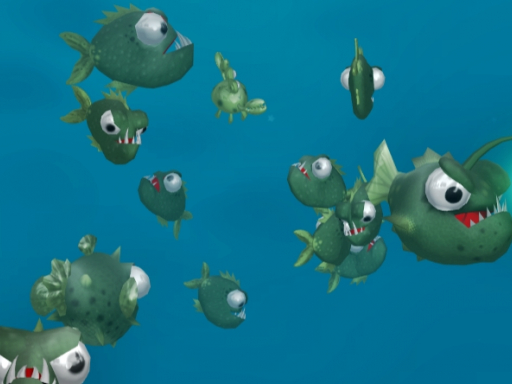
The Top 1000 leaderboard is Aquar.io's hall of fame. Getting there requires a combination of mechanical skill, game knowledge, and — I suspect — more free time than most adults can spare. But watching top players in Spectate mode reveals habits that aren't documented anywhere on the wiki or in community guides.
Top players move their Queen erratically. Not randomly — there's intent behind it — but in patterns that are deliberately unpredictable. Straight lines are death sentences for a Queen because they make her trivially easy to target. The best players weave, stutter-step, and circle, keeping their Queen in constant motion even when there's no immediate threat. This makes it incredibly difficult for an enemy to predict where the Queen will be in two seconds, which is the window you need to land a kill.
They devour aggressively, not defensively. The instinct for most players is to maintain a large school for protection and only devour when they feel safe. Top players flip this. They devour constantly, keeping their school lean and their Queen's XP climbing fast, and rely on smart positioning and Hermit Crab shields for defense rather than raw numbers. A smaller, well-positioned school with an evolved Queen is more dangerous than a massive school with a low-tier Queen. This is counterintuitive, and it took me weeks of spectating to understand why it works.
They use Spectate mode as a training tool. This sounds obvious, but the implementation is what matters. Don't just watch — study specific things. Watch how a top player positions their Queen relative to their school during combat. Note when they choose to merge versus when they stay unmerged. Count how many units they keep near the Queen versus how many they send forward. The camera controls (WASD in Spectate mode) let you get close-up views of individual micro-decisions that you can't see during normal gameplay. I learned more about combat positioning from thirty minutes of Spectate than from three hours of playing.
Server selection is a real strategy. The nearest server is chosen automatically, but you can override it manually. Less populated servers mean fewer threats, which means you can focus on evolution and growth without constant interruptions. This is ideal for grinding toward Tier 4 and Tier 5. More populated servers mean more combat, more rival schools to absorb, and more score per kill — but also higher risk. Top players I've observed seem to use quiet servers to build up and then switch to populated ones once they've reached Tier 4 or 5 to rack up kills and climb the leaderboard.
They think about unit economy, not just unit count. A school of 100 Guppies sounds impressive, but 100 Guppies have less combat value than 20 Guppies plus 5 Crabs plus 3 Lionfish plus 2 Pufferfish. Unit diversity multiplies combat effectiveness. Top players actively manage their school composition rather than just collecting whatever fish they stumble across. If their school is heavy on Guppies, they'll specifically hunt for Pufferfish and Lionfish to round it out.
Editor's Note: I spent an entire afternoon in Spectate mode watching a player who consistently held the top spot on their server. They never had the biggest school — often they were mid-pack in terms of raw numbers. But their Queen was always Tier 4 or 5, their unit composition was always balanced, and their positioning in combat was surgical. It was like watching someone play a different game than everyone else on the server. That's the gap between a good Aquar.io player and a great one: it's not about having more fish, it's about doing more with the fish you have.
The Deep End: Surviving the Late Game
Reaching Tier 5 — the Necro Queen — is an achievement. Playing Tier 5 well is an art form. The fundamental shift is jarring: your Queen no longer produces Guppies from food. Every unit in your school must come from kills. You're no longer a farmer; you're a predator.
This changes your entire approach. Passive food collection becomes nearly worthless — you can still eat food for Queen health, but it won't grow your school. You need to hunt. Aggressively. Other players' schools, neutral creatures, anything you can kill to generate Skeletal Guppies. The Necro Queen's undead army is fueled by combat, and if you can't maintain a steady stream of kills, your school will wither and you'll be exposed.
The risk-reward calculus at Tier 5 is extreme. Your Queen has five hearts, which gives you the most survivability of any tier. But your school size is directly tied to your kill rate, and if you get caught in a bad engagement and lose most of your fish, rebuilding is much harder than at lower tiers where food automatically generates new Guppies. You're playing without a safety net.
My advice for Tier 5 players: pick your fights with surgical precision. Target isolated players, not clustered groups. Use Pufferfish to break up enemy formations before engaging. Keep Lionfish in your school to poison enemies during extended fights. And never, ever let your Queen lead the charge — at Tier 5, she's too valuable to risk in direct combat unless the fight is already won.
The late game also brings a meta-challenge: other players will recognize you as a Tier 5 Queen and react accordingly. Some will flee. Others will team up — not formally, but through mutual self-interest — to bring you down. The bigger you are, the bigger the target on your back. I've watched Tier 5 Queens get swarmed by coalitions of Tier 3 players who individually couldn't touch them but collectively overwhelmed their school. It's humbling.
If you find yourself in this situation, the play is to split the coalition. Use Pufferfish to separate the attackers. Pick off the smallest or most overextended member of the group. Once one or two players break off, the coalition usually dissolves. Players in Aquar.io are self-interested — they'll cooperate against a common threat, but the moment the threat diminishes, they'll go back to competing with each other.
Final Currents
Aquar.io is the kind of game that doesn't need a marketing budget or a trending hashtag to be worth your time. It's a browser game with a dedicated community, genuine strategic depth, and a design philosophy that respects the player's intelligence. The Queen mechanic alone — the idea that one unit's survival is the entire game — creates a tension that most io games can't replicate.
If you're new, take it slow. Spend your first few sessions just learning the controls, collecting fish, and getting a feel for how the school moves. Don't rush to evolve. Don't pick fights you can't win. The Queen's journey from a lone Tier 1 fish to a Tier 5 Necro Queen is supposed to take time — that's the point. Each tier teaches you something the previous one didn't, and skipping those lessons by grinding too fast will leave you unprepared for the late game.
If you're already experienced, hit Spectate mode. I guarantee you'll learn something. The top players on any given server are doing things that aren't in any guide — including this one. The game's community is small enough that the meta is still being discovered, not memorized. That's rare in 2026, and it's worth appreciating.
And if you're somewhere in between — comfortable with the basics but not quite cracking the Top 1000 — focus on unit composition and combat positioning. Those are the two areas where intermediate players consistently leave score on the table. A well-composed school with smart positioning will beat a larger, poorly managed one almost every time.
Aquar.io has been running for years without a major update, and it's still pulling players. That tells you something about the strength of the core design. Some games don't need constant iteration. They just need players who understand what makes them special. Jump in, build your school, protect your Queen, and see how deep you can go. The ocean is waiting.